THE $100 BREAKFAST BURRITO?

If you hang around private aviation pilots long enough, you are eventually going to hear references to getting a one hundred dollar hamburger.  You might wonder where on earth these guys go to spend that much money on a hamburger?  Even a Wagyu beef burger in a ritzy restaurant does not cost that much. How do these guys acquire such expensive tastes and how do they afford it?

 Flying is about adventure – big or small – and the $100 hamburger run is a bit of an adventure. The $100 hamburger is a euphemism for a burger purchased at an airport restaurant on a cross-country trip taken for fun.  (Sometimes the restaurant is near the airport.)  It is an excuse to get the plane out and go fly somewhere besides the local traffic pattern.  Such trips actually help a pilot maintain proficiency, benefit the airplane by running the engine at operating temperatures for an extended period, and, of course, are an excuse to spend some time with friends.  I am sure pilots can come up with a million other excuses – err, “reasons”, that is – to fly to a restaurant for a meal.

There is even a book about it: “The $100 Hamburger” by John Purner.   His website, 100dollarhamburger.com, is an evergreen site supplemented by the community that participates there.  There is a minimal monthly fee to be a member of the community.

Now, if one lives in New Mexico, you are generally not flying out to get a $100 hamburger, you are looking for a great $100 breakfast burrito! The breakfast burritos in New Mexico are nothing like those pale imitations you get at the fast food or drive-in places. 

There are two basic categories of breakfast burritos: handheld or smothered on a plate.  The handheld burritos use large flour tortillas, have eggs, papas (potatoes), and your choice of sausage, bacon, or chorizo.  Many places offer to add New Mexico’s primary contribution to culinary culture: green chile!  This wonderful concoction will be rolled and folded up (so full it can barely be rolled), and you will be asked the state question of New Mexico: red or green? (Do you wish red chile sauce or green chile sauce?)  You are then given a small container of your choice to be drizzled judiciously over the end of your burrito as you hold it in your hand and eat it.

The second version is the smothered burrito that comes on a plate, and it is a wonderful thing! Same large flour tortilla, same ingredients, usually wrapped more loosely since it will not be handheld, and smothered with your choice of red, green, or Christmas. (Christmas is red on one half of the burrito and green on the other.)  Woo-wee, good eatin’!

Now part of the fun of flying is going to new places along with seeing and doing new things.  My flying feet had been getting itchy, I wanted to go to a new place or a place I had not visited in a long time. I needed to be able to grab a $100 breakfast burrito, and I wanted something interesting to see.  Not too picky, right?  I also wanted to take my friend, Jack Miller, along as he was a student pilot who was having a few nerves about some aspects of flight. Experiencing a full cross-country flight with its bumps, burbles, navigation, radio calls, etc. can help because is not uncommon for early student pilots to be overwhelmed with all they are trying to learn and the opportunity to simply sit and watch during a private aviation flight can be helpful.  (And it’s fun! Did I say that already?)
 So, where to go? In casting about, I remembered I had seen a booth at an airport event and read an article about the museum on the airport in Grants. The museum had an old air mail and Transcontinental Air Transport (TAT) concrete arrow route guide as well as a beacon that was used to light the flight path once night flights began. There were also the generator shed that would be located at beacon site and other historic items. The museum would be interesting to see, and I had only flown to the Grants-Milan airport once and that was almost 20 years ago.  That long-ago trip was for the initial in-person training Angel Flight required at the time. Grants was where the trainer was located, and Richard Ridenour (my partner in the Saratoga I was flying at the time) and I flew in, got the training, and flew right back out.

 So, I had not visited there in a long time – check. It had something interesting to see – check. It would be about an hour long cross-country flight, so it was within reason but long enough to be of some value – check. BUT, what about the food?

Thank you, YouTube.  Not long before our trip, a pilot out of Albuquerque had published a video about his fun flight to Grants and restaurant he visited.  The restaurant was about a mile or so from the airport, but Grants-Milan, being a great, typical small town airport, had a crew car available. https://www.youtube.com/watch?v=fKgRf8CsHBw Food? – Check.
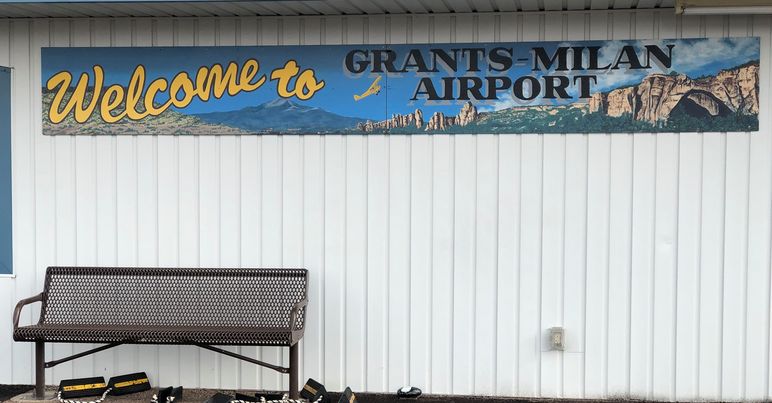
(Photo courtesy of Grants-Milan Airport Facebook page.) 

On a Saturday morning in November, Jack met me at the airport, we fired up RizAir1, and away we flew to Grants.  RizAir1 has quite a bit more performance that the Cessna 172s that Jack had been flying, so throughout all phases of flight I explained to Jack what I was doing and why I was doing it.  I could see him relax a bit and the light start to come on as the flight progressed.    

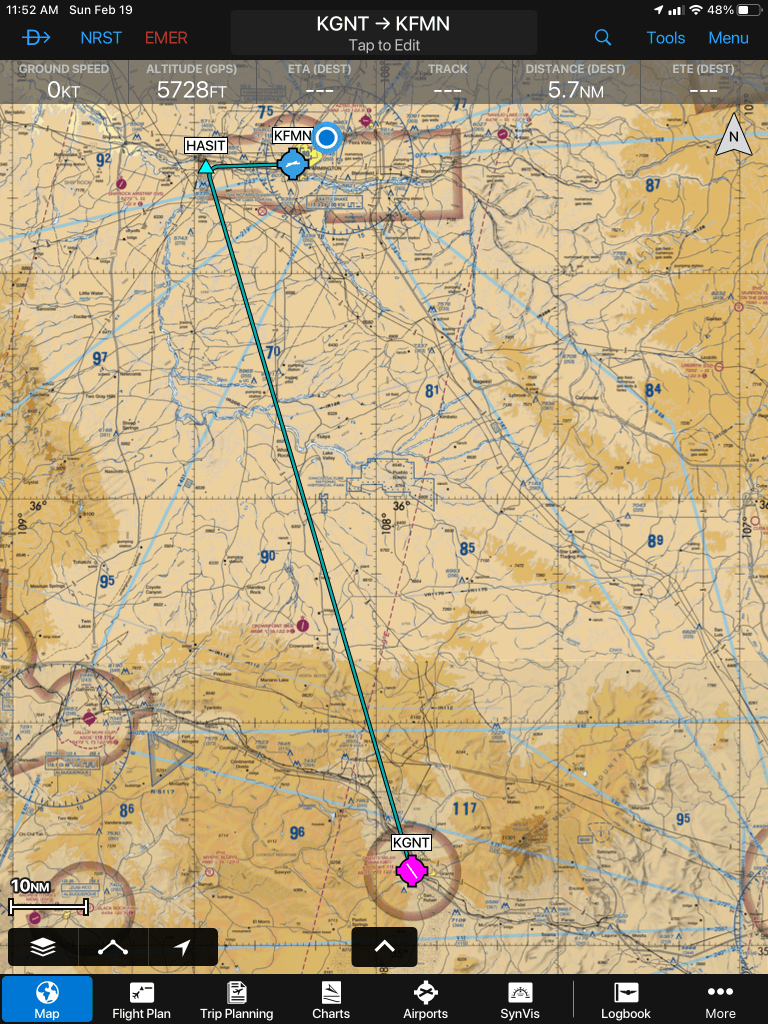
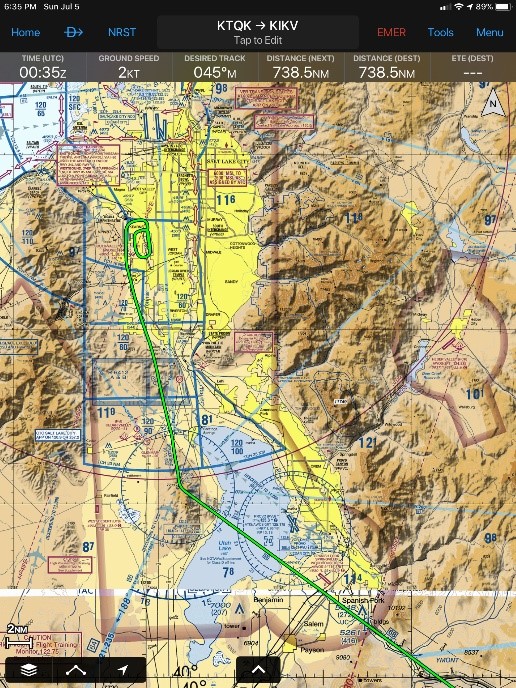
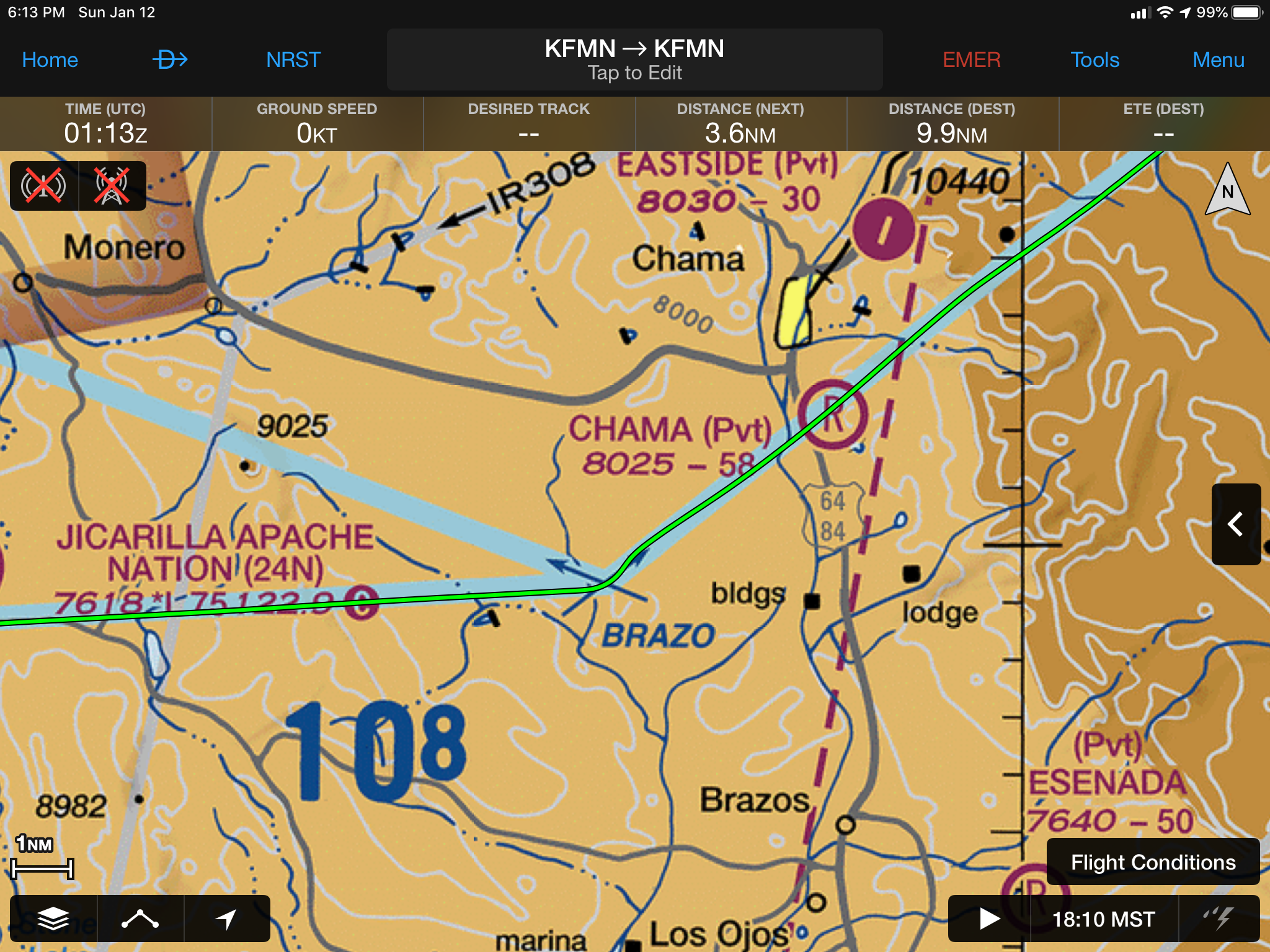
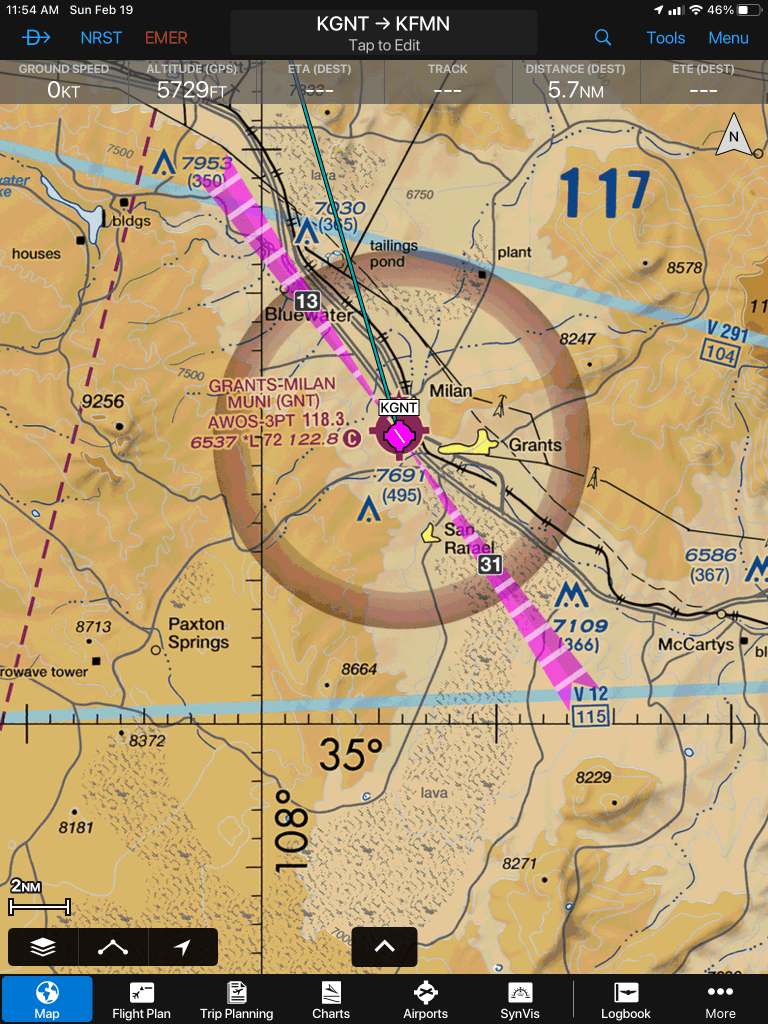
Here is a screenshot of our flight route going to Grants.
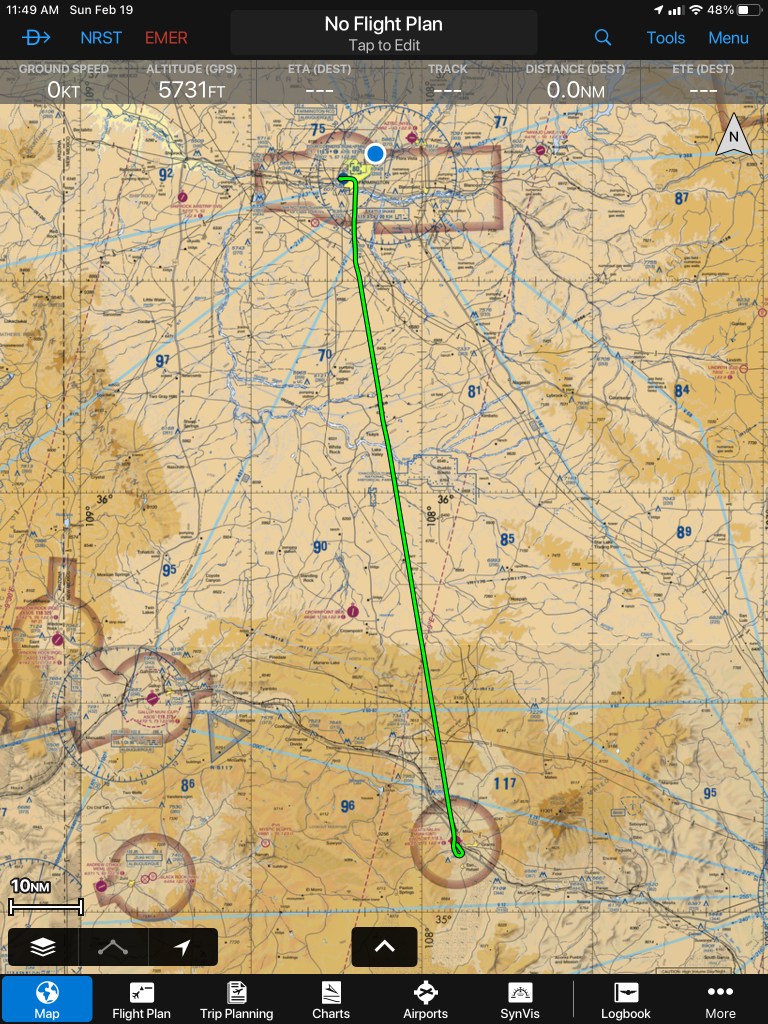
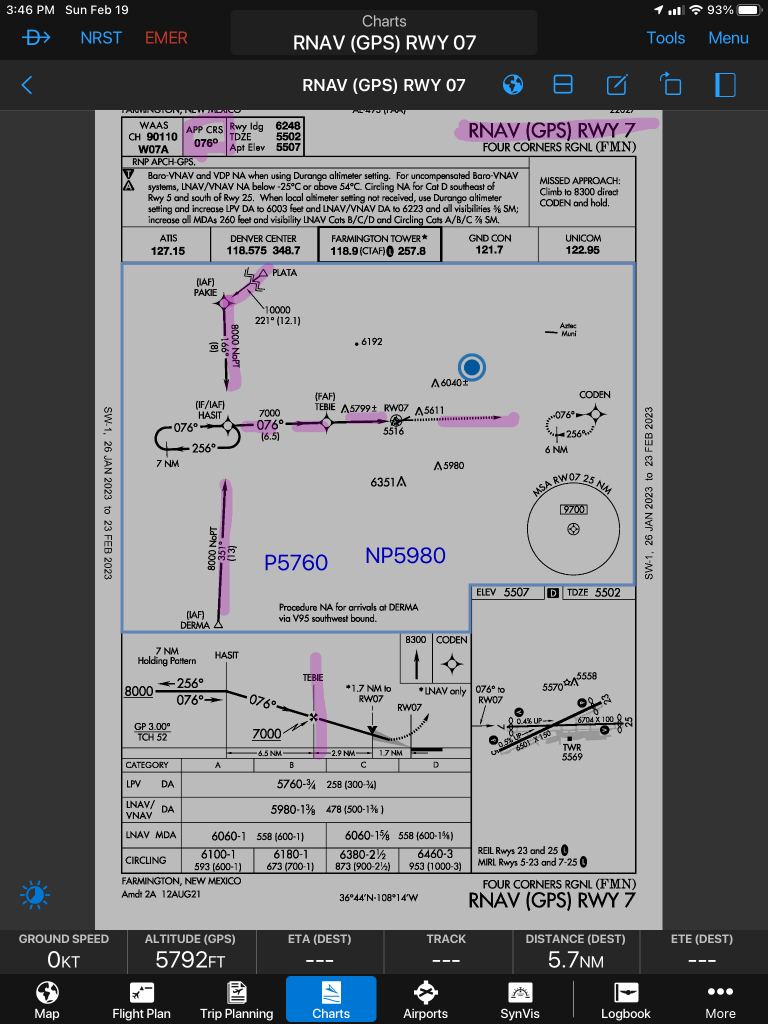
On the way back, I shot the GPS Runway 7 practice approach into Farmington to give Jack a quick exposure to the next step after the private pilot phase. (I was unable to log it as a practice approach because I did not have a legal safety pilot.) 
              

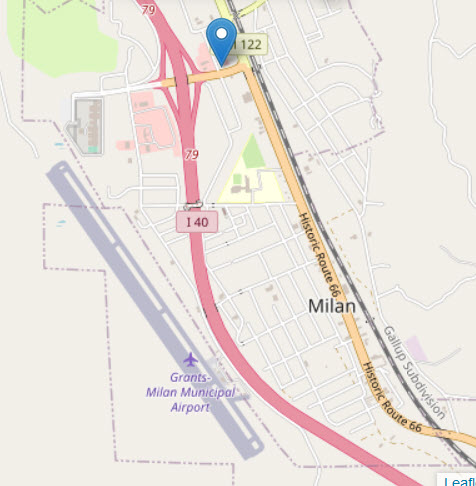
But what about the food, you ask??!!  Well things were working well for us that November day.  The crew van was not present when we arrived, but the couple that had it returned with it within 10 minutes of our arrival.  Jack and his wife each have independent businesses that necessitate travel to the Grants and Gallup area so Jack was somewhat familiar with Grants.  Crew resource management dictates the more knowledgeable/experienced person handle the situation so, in this case, Jack became the designated driver.  The map showed we could throw a rock and hit this place.
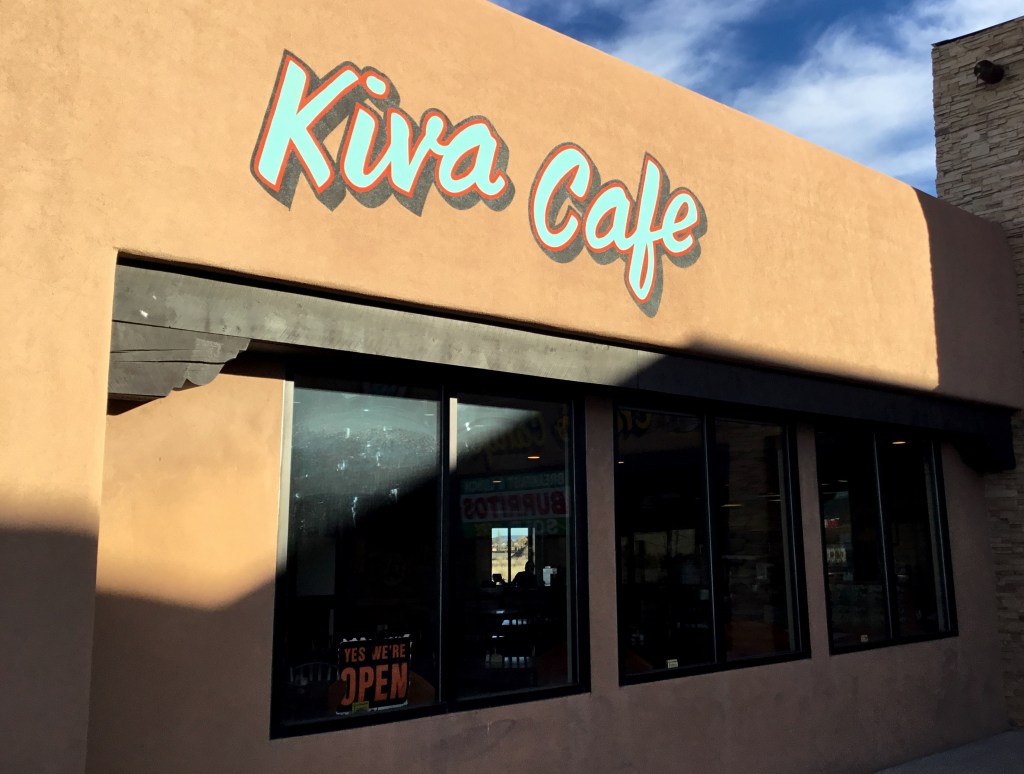
It was a good thing Jack was driving because road construction on the other side of the interstate almost turned our one mile trip into Gilligan’s Island three-hour tour.  But after numerous detours, we found it and soon were on walking in to try out the Kiva Café (which is actually at the Love’s Truck stop in Milan).

It was a slow morning and there were only three or four other customers.  Our waitress was prompt and friendly and we quickly ordered. What do you mean what did I order? A breakfast burrito, of course: Bacon – Red.

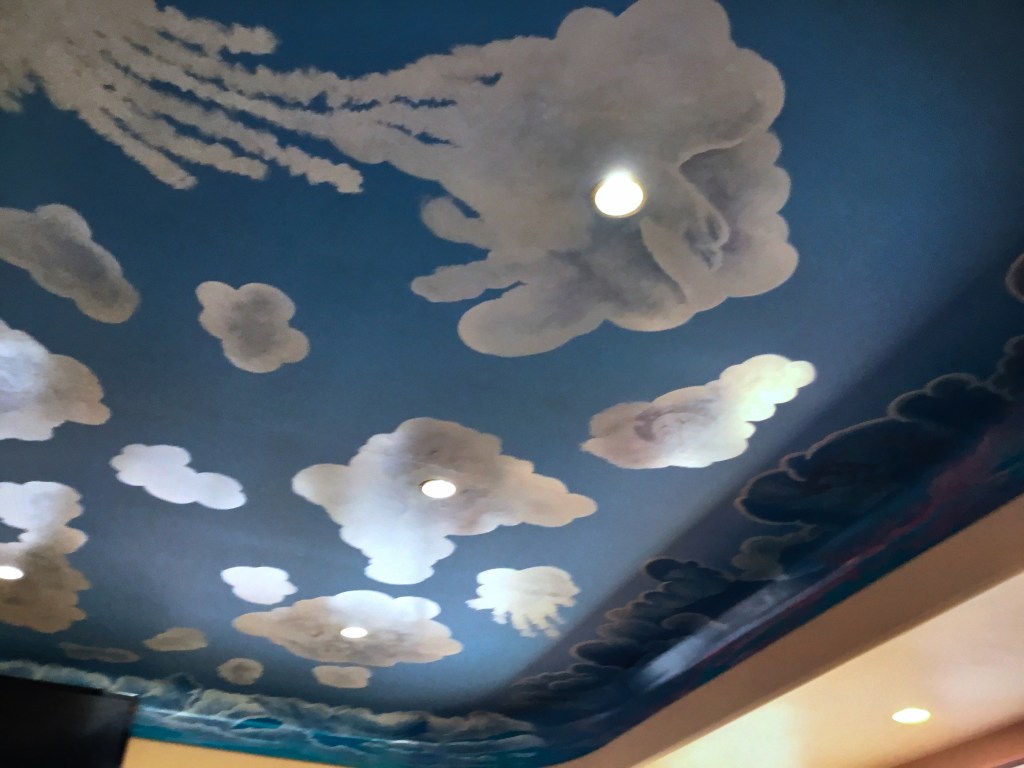
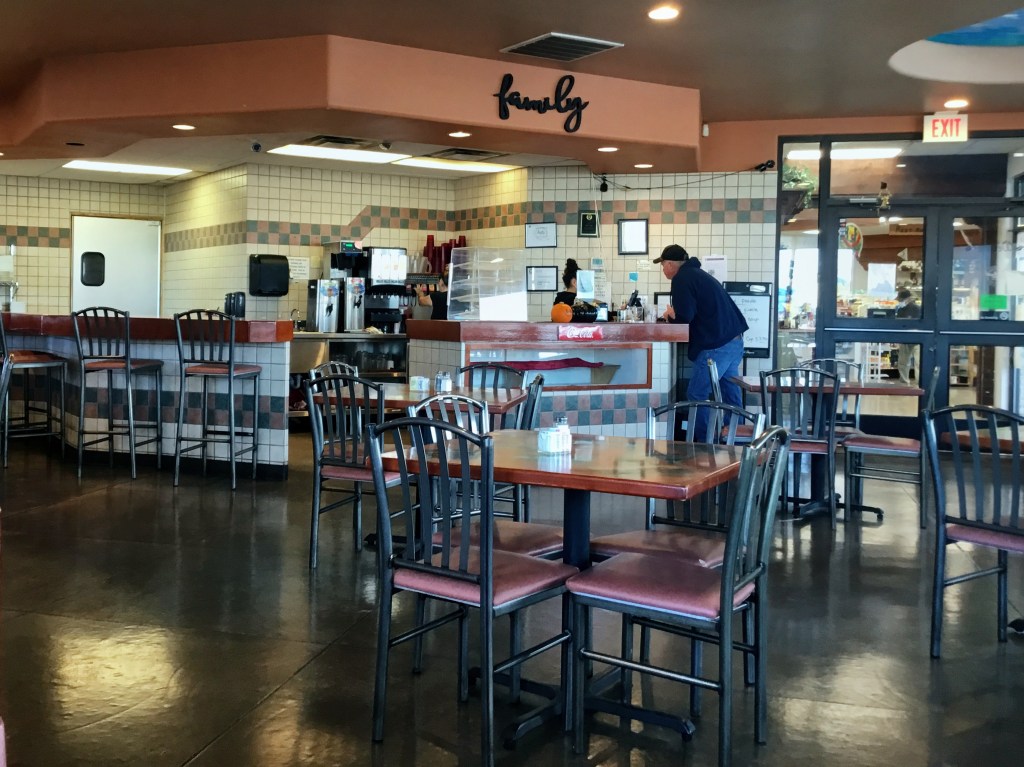
The interior of the Kiva is pleasant and interesting:
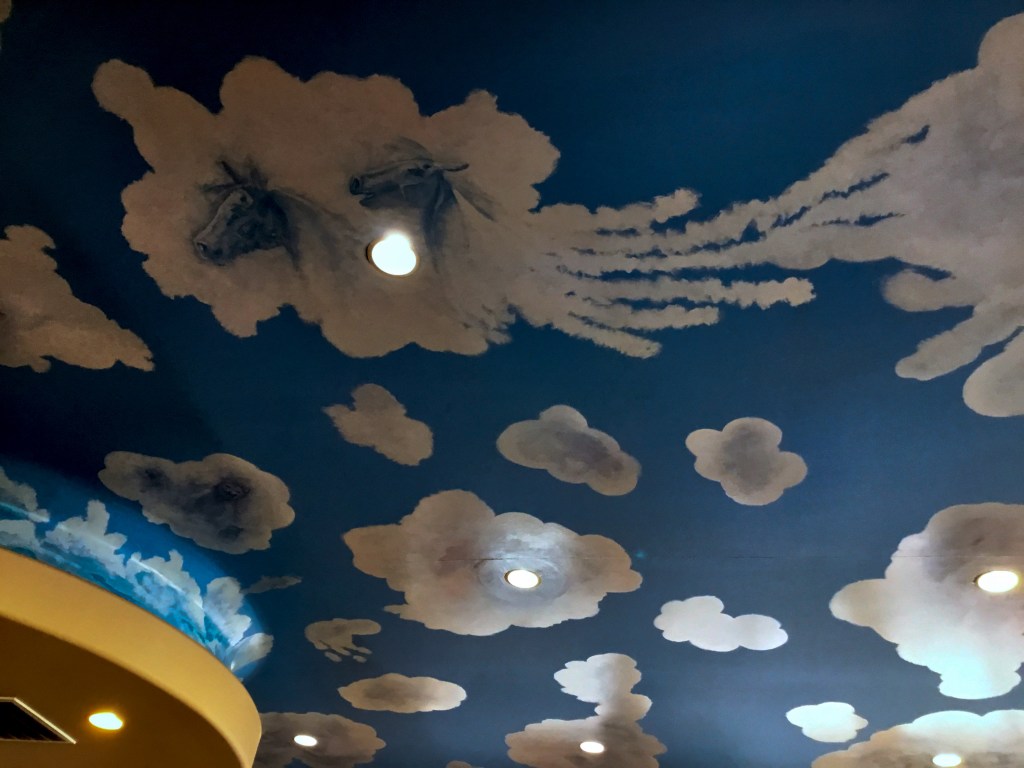
After a short wait, the purpose of the trip of the trip appeared before me – what a great looking burrito!
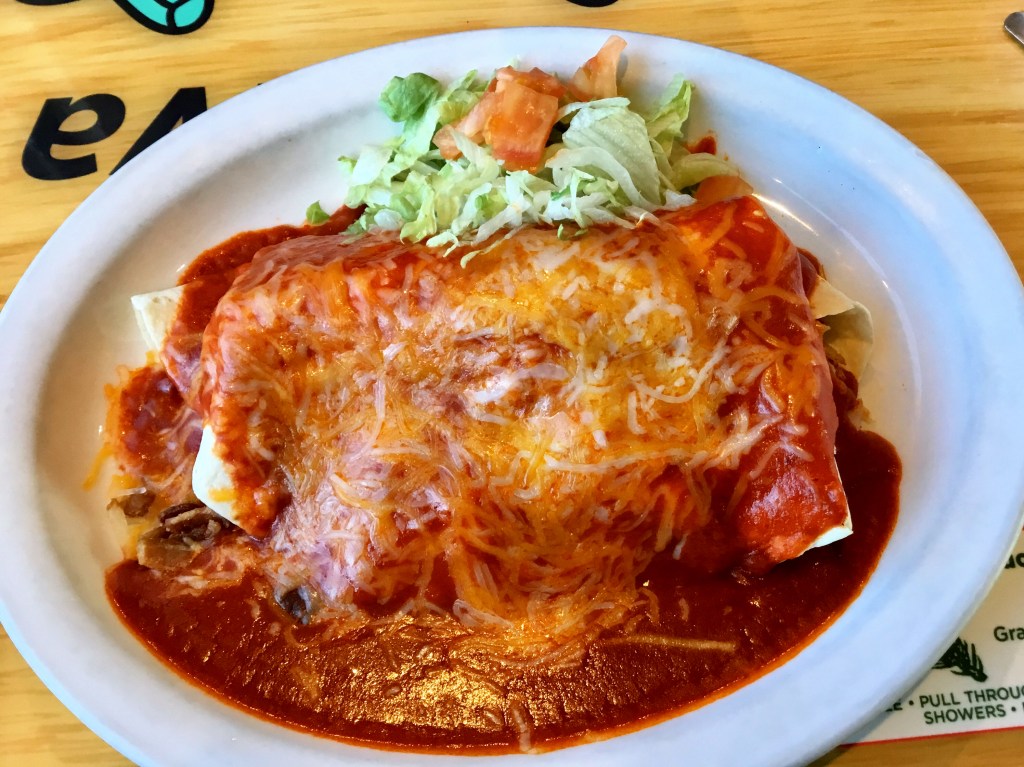
Yes, it tasted as good as it looked.

For you wayward souls who would want something besides the burrito, here is a portion of the breakfast menu, but be aware that prices have increased substantially with the minimum wage hikes and inflation that have occurred since this menu was posted online:

Fat, dumb, and happy, we proceeded back to the airport to enjoy the tour of the Western New Mexico Aviation Museum. The history preserved there is very interesting; but, alas, that must await another blog.  After the tour, we mounted up and pointed RizAir1 home and were back in front of the hangar by 12:30 p.m.

Grants-Milan gives you the opportunity to visit a town that is along historic Route 66, along a historic airway, and that was the site of much of the uranium mining that provided the fuel for our weapons and naval vessels throughout the Cold War.  Grants has the only museum in the world dedicated to uranium mining and it includes a re-creation of an underground mine. I need to plan a trip back to visit the mining museum.

Now where should I go next for a $100 burrito/hamburger?

Clear skies and tailwinds.

Gary Risley

© February 2023 RizAir Blog 23  

All photos are the author’s unless otherwise noted.

#generalaviation #hundreddollarhamburger #grantsmilanairport #privateaviation #breakfastburrito #westernnewmexicoaviationmuseum #airmail #TAT #route66 #aviation #pilot
REAL HEROES DON’T WEAR CAPES

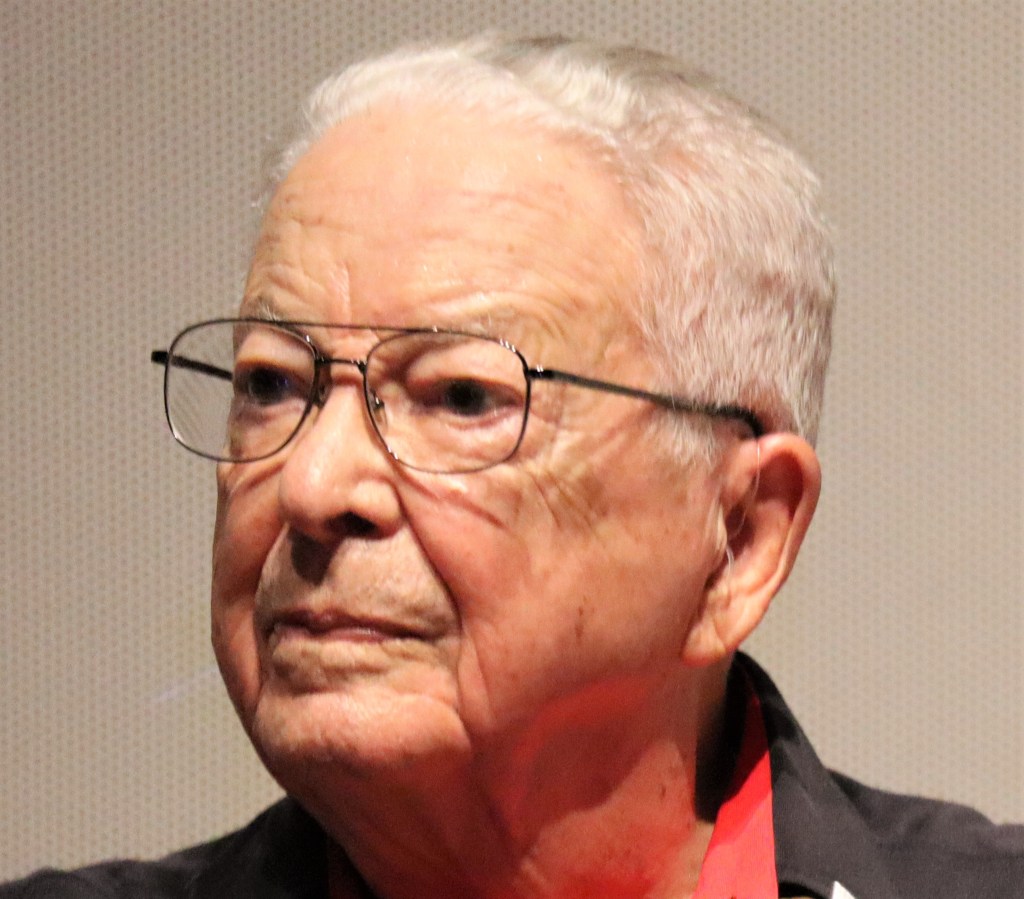
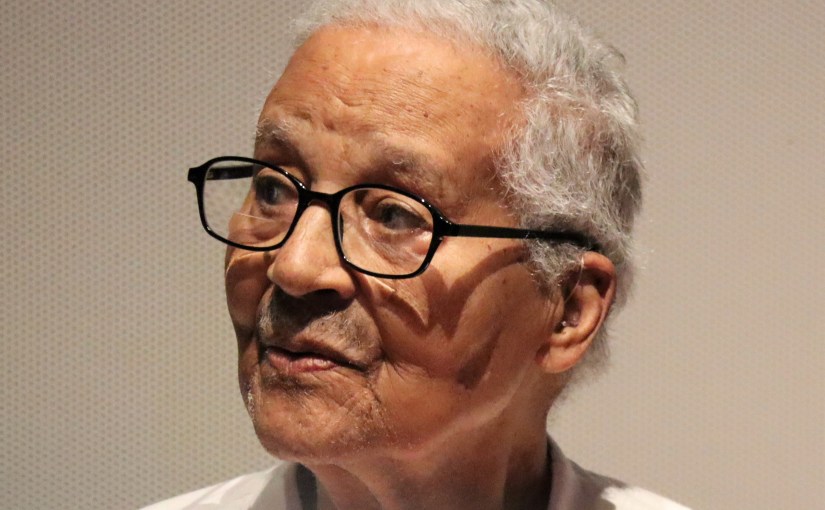
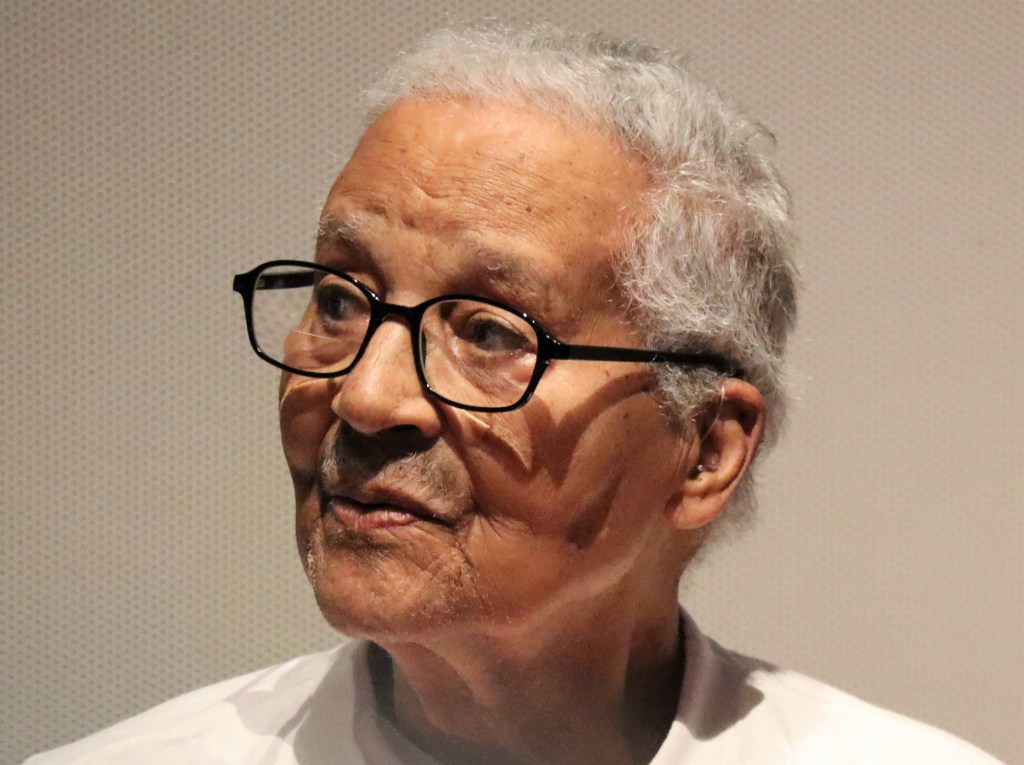
Gen. Charles McGee – Author’s Photo

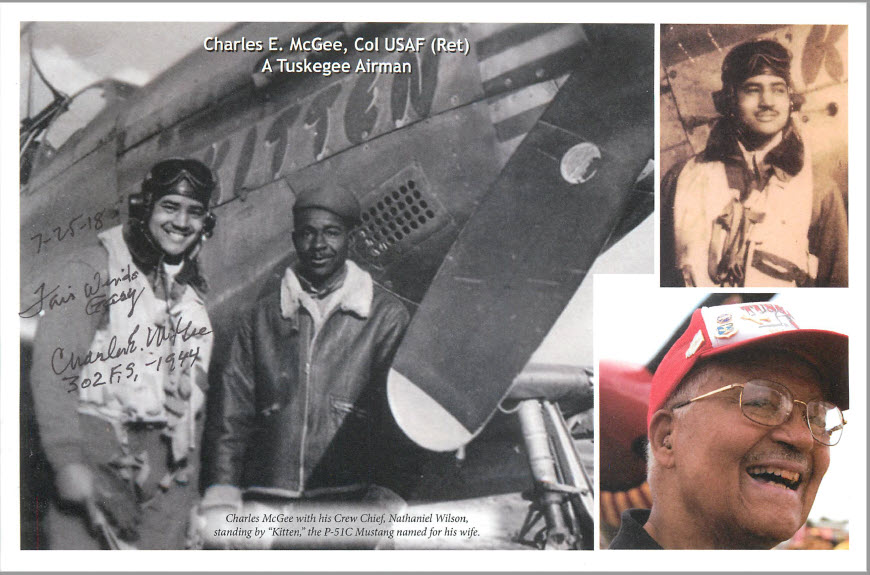
Brigadier Gen.  Charles McGee died on January 16, 2022 and was laid to rest in Arlington Cemetery on June 17, 2022. The news left me with sadness as I reflected upon the loss of yet another great American hero. I then began to reflect upon other heroes that I have met, particularly at Oshkosh, including General McGee’s good friend, Col. George Hardy, and famous WASP pilot Nell Bright. Having heard these individuals, and many others, speak in person, I have come to understand that heroes are ordinary people who do extraordinary things. Real heroes don’t wear capes.
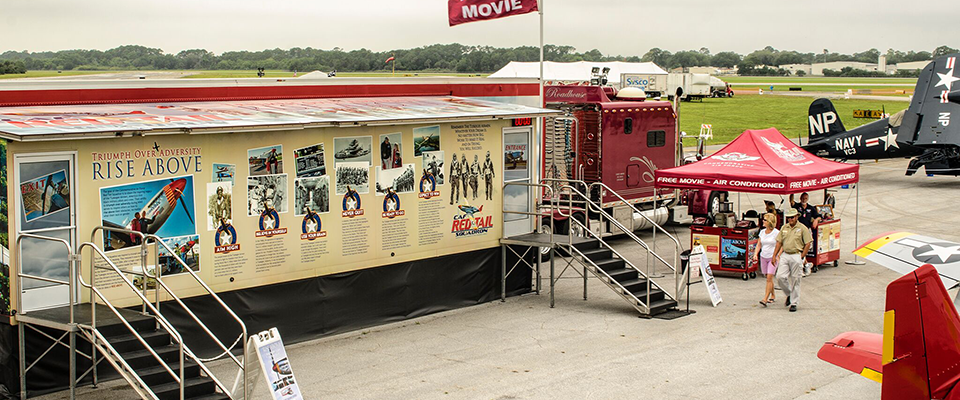
When visiting Oshkosh AirVenture (#OSH, #Airventure), I take advantage of every opportunity I can to see and listen to these heroes of the past and present. I had the privilege of first seeing and meeting General McGee and Col. Hardy at Oshkosh when I visited the Red Tail Squadron promotional video, Rise Above, that was playing in a trailer near the Pioneer airport in 2018.  Both men had been part of the Tuskegee Airmen, the famous all-black fighter pilot squadron that trained in Tuskegee, Alabama and was established during World War II .
Tuskegee Airmen Theater Trailer Airventure 2018 – Courtesy of EAA

Resented, not respected, and treated with suspicion at first, the squadron went on to become a highly decorated group of fighters and the squadron of choice for bombers needing escort.  Take the time to look up the history of the Tuskegee Airman, their difficult path to becoming aviators, and then their struggle to be allowed to effectively serve in combat. The history is too long to set forth in this article.

Col George Hardy – Author’s Photo

What gentle and wonderful men! They were gracious, friendly, outgoing people whose fame did not turn them into prima donnas. On that first meeting, then-Colonel Charles McGee and Col. Hardy autographed a biography of Gen. McGee that was written by his daughter. The book is now a very cherished possession.

At Oshkosh AirVenture 2021, I had the opportunity to hear Gen. McGee and Col. Hardy on two occasions. At the second presentation, they were joined through Zoom video conference by Nell Bright, one the women who served as a WASP. What an extraordinary hour!

Trailblazing is hard work. You have to cut your own path through the brush or carve the trail out of the mountain to get where you want to go. Each yard of path gained is hard-earned. Each of these three individuals was a trailblazer in his or her time. Black Americans were treated as truly second-class citizens, enduring racist attitudes, both legal and de facto, which restricted opportunities that were taken for granted by others. Flying in the 1940s was a man’s game, but the women who became the WASPs demonstrated that they were fully capable and qualified to operate any type of aircraft that was in the fleet. But for all of them, the path was not easy, and perseverance and determination were keystones in their ability to accomplish the great things they achieved in their lives. Self-pity was not to be tolerated in any way.

Both Gen. McGee and Col. Hardy were highly articulate in their presentations, are clearly well-educated men, and they spoke of the efforts that it took on their part to become successful career Air Force officers. They spoke without rancor, without hostility towards others, and expressed a deep-rooted love and patriotism for their country. These men were willing to die for a country for which they were not yet receiving the full benefits of their citizenship. In these times of entitlement, it was heartwarming to see two men who appreciated the greatness of the country they lived in, warts and all.

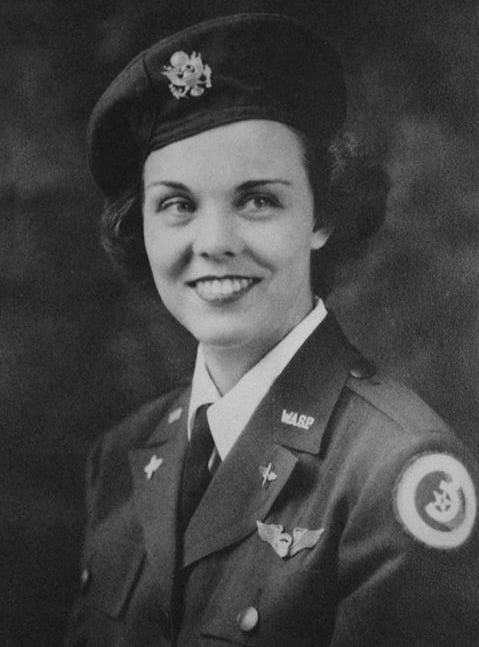
Nell Bright (nee Stevenson) was a woman pilot when they were not very common, and she was determined to serve her country. She grew up in Canyon, Texas, graduated West Texas State in 1940, and started flying lessons in 1941.  She obtained her license in 1942 with 75 hours in a Taylorcraft. Seeing an article in Flying Magazine about women pilots being wanted, she wrote in, was interviewed in Fort Worth, Texas, was accepted, and training began.  She received her training at Sweetwater, Texas Avenger Field in 1943. Her personality leaps through the screen, and she was and is clearly a force to reckoned with!  
Nell Bright as a WASP – Courtesy Commemorative Air Force

The Women’s Airforce Service Pilots a/k/a Women’s Auxiliary Service Pilots (WASP) was an Army Air Forces program created to train women as pilots to test and ferry aircraft and train other pilots so that men might be freed up for combat. The women had to hold a pilot’s license when they joined but were then trained in Army procedures; predominately, at Avenger Field in Sweetwater, Texas.   In an afront to these women, after the war the WASP were disbanded.  The final WASP pilot class graduated on December 7, 1944, but the WASP were disbanded two weeks later. General Henry H. “Hap” Arnold supported granting the women Army Air Force Commissions, but the bill to approve it died on a narrow vote in Congress. Arnold ordered that WASPs receive certificates comparable to a honorable discharge. (https://en.wikipedia.org/wiki/Women_Airforce_Service_Pilots)

While at one base where they were serving, Nell noted “The commanding officer didn’t particularly want us eating in the officers’ mess, but we were entitled to do so, so we did.”

This “Don’t mess with us” attitude continued when some Tuskegee Airmen arrived on base and were racially segregated. “These trained pilots and officers of the U.S. Army Air Force could not eat in the officers’ mess,” said Nell. “We spoke up and they were finally allowed in, but they had to sit away from everyone else.”  Not appreciating the treatment their fellow aviators were receiving, the WASPs went and joined the Tuskegee Airmen at their tables, which was probably quite the scandal.

George and Nell shared that the WASPs received none of the benefits that servicemen did following the war. The Army Air Force deemed them to be federal civil service employees in place for a limited time during World War II. Thirty-eight members lost their lives in training and active-duty accidents.  There were no military death benefits.  The deceased pilots’ families had to bear the expense of the transport of their loved one’s remains to home.  The families of the women lost were not allowed to display the “Gold Star” in their window which represents the loss of a loved one in wartime.

Since they were civil servants, the WASP pilots did not receive G.I. Bill benefits. The failure to recognize the WASP pilots as members of the military was finally rectified by Congress in 1977. The bill gave them “veteran” status and recognized they had served on active duty.  They became entitled to Veterans’ Administration Benefits.  They were truly the first women pilots to serve in the military.

Nell Bright – Author’s Photo

Nell married and post-war put her economics studies to work by becoming a successful stockbroker in Phoenix, AZ.  She was one of the first women to be a stockbroker in Phoenix and she worked until age 85, when she finally retired.

I am so glad that I made a video recording of that presentation in July of 2021. General McGee along with Col. Hardy and Ms. Bright were entertaining and inspiring. I hope to someday edit it so that you all may see it and understand what great people these three individuals were and are. People of this nature are walking history books. I would urge you to take the opportunity to go listen to any of them wherever they may be making presentations around our country.  The people who experienced the events, things we only can read about, bring history alive.  They bring the human element to historic events, and they bring it to a level to which you and I can relate.

General McGee’s famous four “P’s” are a great set guideposts for all of us; no matter what the circumstances may be in our lives. General McGee called upon people to Perceive, Prepare, Perform, and Persevere. Good words of advice for achieving any goal that we seek in life. Finally, I think General McGee would have these final words for us as we face the roadblocks of life: “Don’t let the circumstances be an excuse for not achieving.”

God bless.

Clear skies and tailwinds

Gary Risley

RizAir Blog 22,  © July, 2022

#OSH, #Airventure, #tuskegeeairman, #WASPs #charlesmcgee #georgehardy #nellbright #redtailsquadron #Oshkosh #WWII #aviation #fighterpilot

SAMARITAN AVIATION Grace in Action

INTRODUCTION

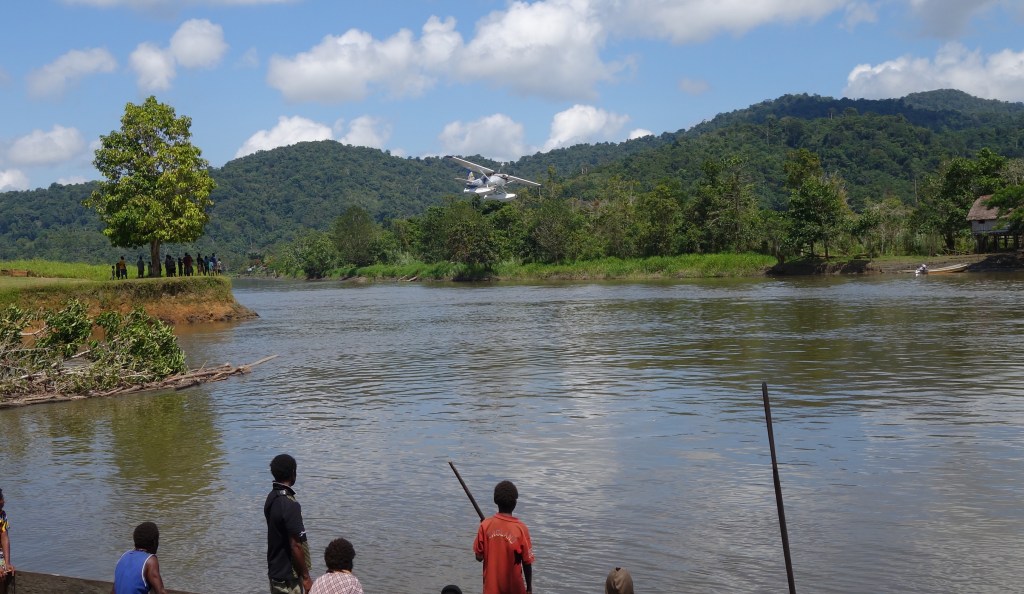
Imagine, if you will, that instead of living in a First World nation with reliable medical services, water on tap, food on the shelf down at the local grocery store, and medical services nearby, you live in a country where there are few roads, no reliable communication services, no grocery stores, no doctor’s offices, and one hospital serving 500,000 people which is anywhere from three to seven travel days away.  Oh, and your means of travel would be by canoe down a 700-mile-long river to a coastal town with the only hospital.  To many of us this might be the definition of a tropical paradise, but if facing a serious medical need, it can be deadly.  Such is the situation in the Sepik River region of Papua New Guinea, and this is where Samaritan Aviation serves.

Courtesy of Samaritan Aviation

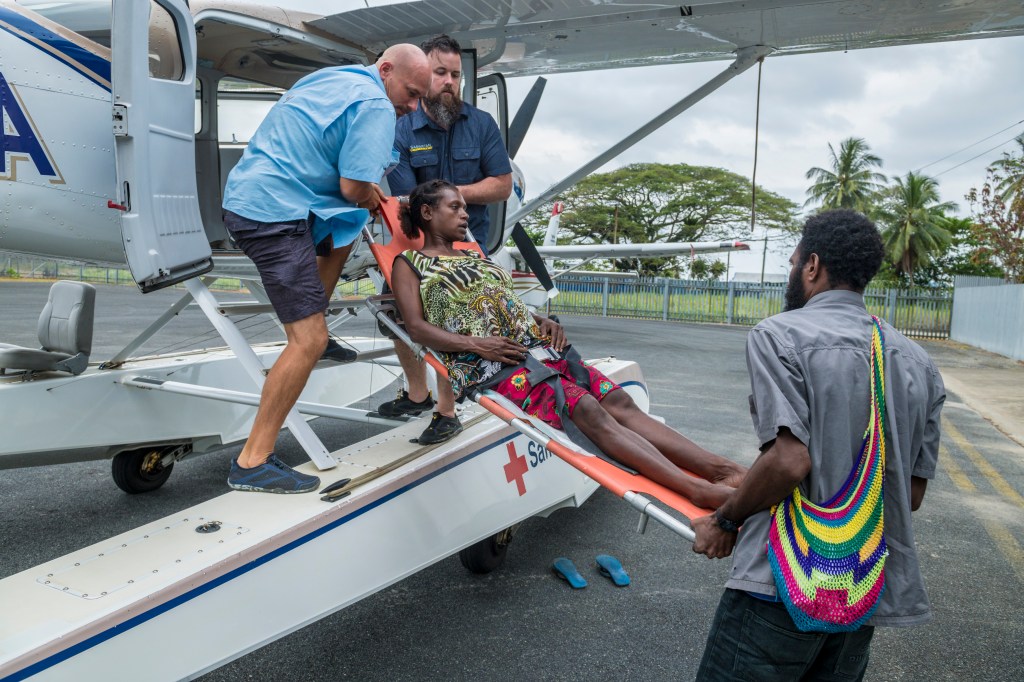
Samaritan Aviation (“SA”) is a Christian missionary organization that for 20 years now has been providing emergency medical services and delivering medical supplies utilizing Cessna 206 amphibious float planes to the people of the Sepik river region of Papua New Guinea free of charge.  SA is an example of “Grace In Action.”

“Grace in Action”.  Grace is defined as “unmerited favor”, or to Christians as “God’s unmerited favor.”  It means two things, among others: 1. It is unearned, and 2. It is free.  SA seeks to be the hands and feet of Jesus by rendering medical service to others who would otherwise be unable to obtain it or afford it; therefore, their ministry is Grace in Action. They save many lives annually through their ministry.

WHERE?

“Wait a minute!” you say. “Papa who?”

Courtesy of Wikipedia

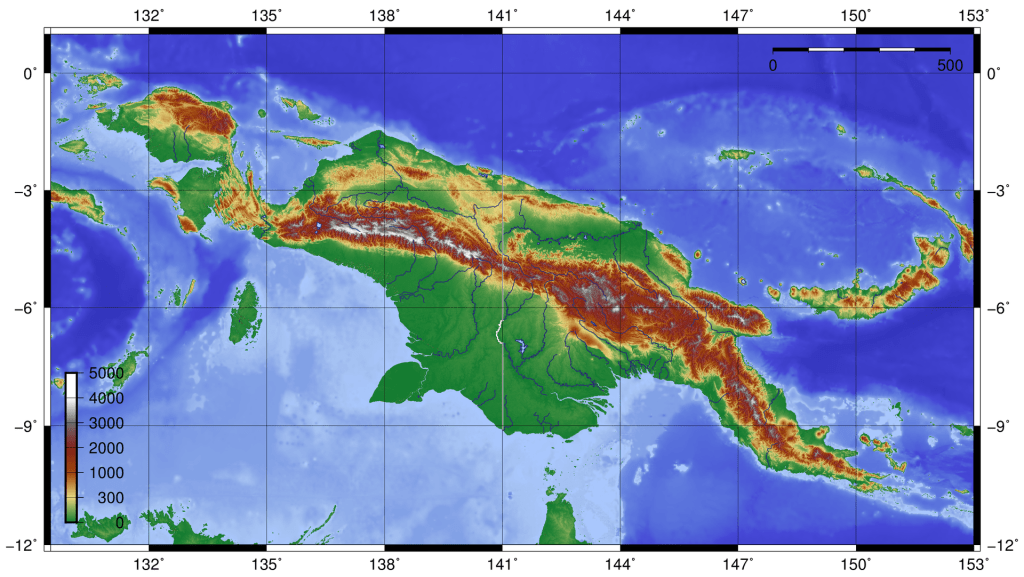
As a typically geographically-challenged American, I had to do some research to understand the situation and the nature of SA’s work.  The island of New Guinea is the second largest island in the world and the largest island south of the equator (https://en.wikipedia.org/wiki/New_Guinea.)  The western half of New Guinea is part of Indonesia, and the eastern half is Papua New Guinea (“PNG”).  PNG was under Australian administration from the time the Germans lost it as a colony following World War I until 1975 when PNG became an independent country and part of the British Commonwealth.


PNG is considered to be mostly a tropical rainforest region.  It has rugged mountains, lots of rainfall (between 17 and 20 days a month), and long, flowing rivers. Infrastructure is costly to build and very limited outside of the coastal area.

Courtesy of Wikipedia

COMMUNICATION CAN BE AN ISSUE

Courtesy of Samaritan Aviation

Wanna learn the lingo?  Well, PNG has more languages than any other country with over 820 indigenous languages. This represents 12% of the world’s total number of languages and  most of these languages have fewer than 1,000 speakers.  While English is the official language of the government, few speak it fluently outside of those highly educated or in government.  The language of commerce is Tok Pisin (commonly known in English as New Guinean Pidgin or Melanesian Pidgin), so if you can pick up on that language you can get around. (https://en.wikipedia.org/wiki/Papua_New_Guinea)

WHAT SA DOES AND HOW THEY DO IT

In its twenty years of operation, SA has flown thousands of life-saving rescue missions and has delivered more than 215,673 lbs of medical supplies impacting more than 100,000 people annually.  There are no roads where SA flies, and there are few mountain runways cut out of the terrain and vegetation. Therefore, SA uses the serpentine, 700 mile long Sepik River as its landing strip.  The most common emergencies are pregnancy/birth complications, highly venomous snake bites, malaria, and wounds from tribal conflicts.

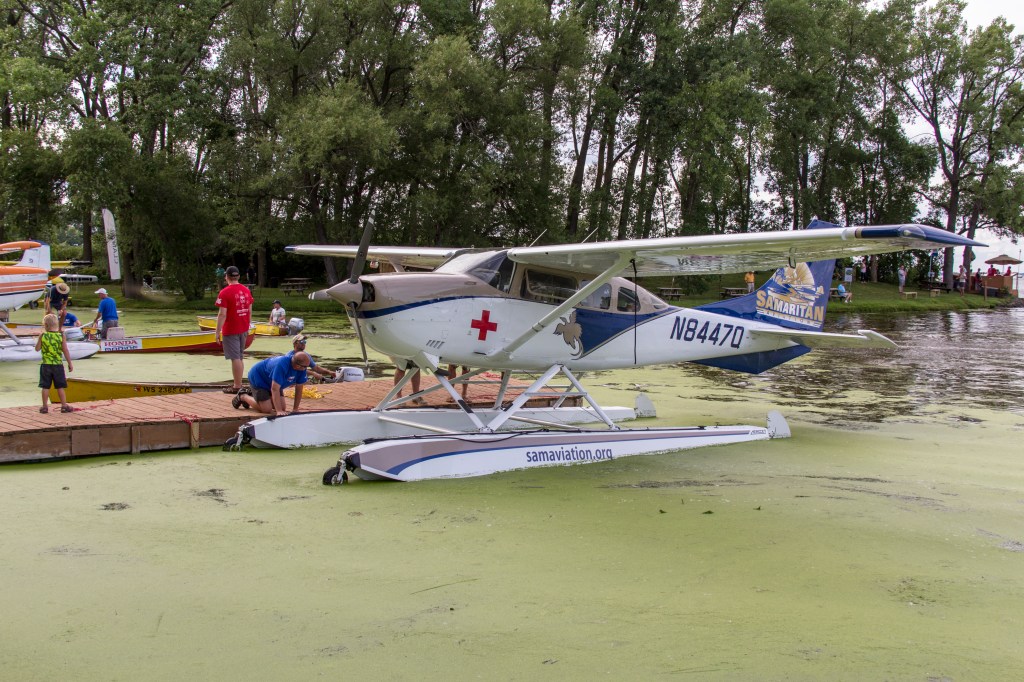
 The non-turbine aircraft that best fits its mission is the Cessna 206 on amphibious floats.  The 206 has a large payload capability, can be modified with double doors in the back to accept patients on stretchers, has good flying characteristics and excellent range.

Author’s Photo

The tropical nature of the region makes each landing on the river a new adventure every day.  Tropical rainfall can result in the river rising or falling several feet in a day or two, and the resulting flows result in debris off all types popping up at any time, any place in the river.  Assessing the landing location must be done every flight, and there are times conditions do not permit landing.  The decision not to land can be a heart-rending condition.  “If you know that a snake bite victim sitting in that canoe on the river waiting for you is going to die if you cannot land, it makes it very hard to say “No”, said founder, Mark Palm.  Fortunately, those occasions are rare.

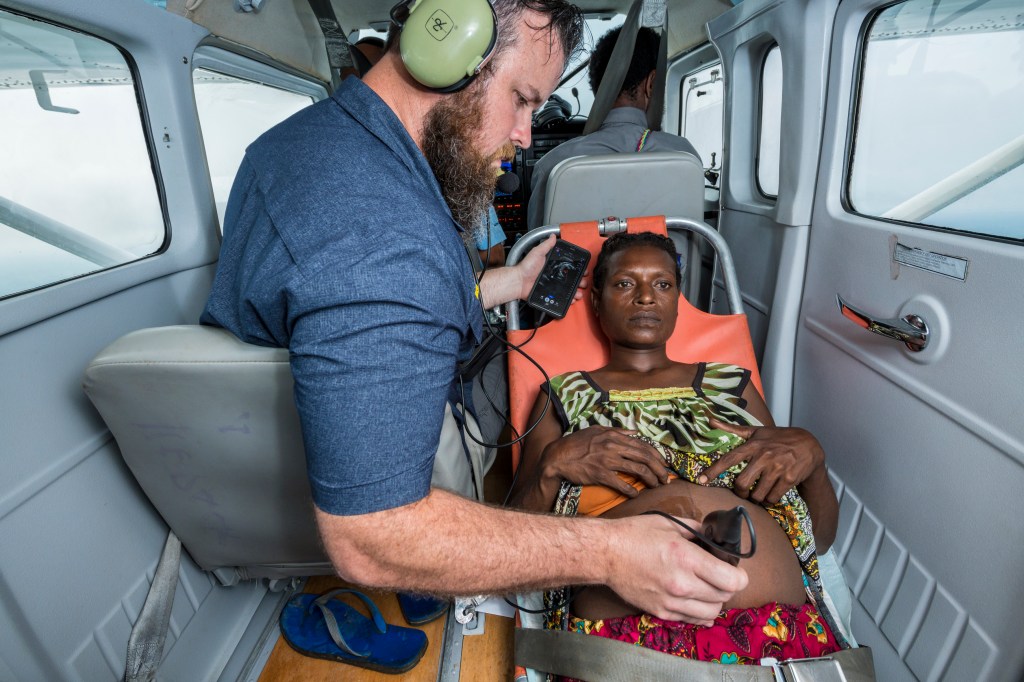
The typical crew is a pilot and a trained emergency-response nurse.  Upon landing, the nurse will administer anti-venom, assess a patient, deal with malaria cases, etc.  Patients that are being evacuated are placed on a stretcher and loaded in the airplane. It is normal for a family member or friend to travel with the injured or ill patient.   Thirty-nine percent of their transports are pregnancy complications where the life of the mother and baby are both at risk, twenty-four percent are disease or illness, and thirty-eight percent of their flights are the result of trauma.

THE ONLY HOSPITAL – BRING YOUR OWN AIDE

There is only one hospital to serve more than 200,000 people on the north side of the country and it is located on the coast in Wewak.  Unlike American hospitals, the hospital staff do not feed, clothe, or render services outside of necessary medical services. It might serve us all well to think of PNG the next time we are frustrated when it takes a nurse 15 minutes to respond to the call button in an American hospital. The traveling companion is as important to the care of the patient’s personal needs as are the medical staff are in Wewak. Volunteers and missionary workers with SA also meet with and seek to provide support to their rescued patients as time and resources allow.

Courtesy of Samaritan Aviation

THE CALLING AND THE DREAM

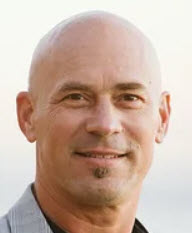
SA is the dream of Mark Palm.  Mark received the call to serve in a foreign country as a teenager on a mission trip to Mexico. His father was a minister who ran ministries serving underprivileged people in California, so the call to serve was probably not a surprise, but, I suspect, the location might have been.

Mark Palm

 From that point forward, his focus was on fulfilling his calling.  His vision became further defined as he matured, and he decided to become a medical missionary pilot.  The process of starting such a ministry from scratch was not quick, it took many years, and there were an abundance of obstacles in the way.  Mark, however, is an excellent planner and he had the patience to work the plan.

In order to be a medical missionary pilot in remote areas of the world, the pilot needs three things: 1. A good theological background, 2. A commercial pilot’s certificate with appropriate ratings (seaplane in this instance), and 3. Be your own certified airframe and powerplant (A&P) mechanic.

Mark attended Bible college to get the theological background, and then underwent the education and training necessary to obtain both his A&P license and the needed pilot ratings.  After several years of effort to complete the foregoing, he put in time working for others to get the experience he needed beyond the “book-learning” to launch his ministry.

His call led him to start his ministry in the remote country of Papua New Guinea.  One does not just pack a suitcase, grab the next flight, and announce “Here I Am!”  So, continuing to work his plan, Mark began raising the financial support needed with the help of family and friends and began looking for the airplane that would be needed.

Lest you think fundraising for a start-up ministry is easy, Mark and his friends sent out several hundred fundraising letters hoping for a multi-thousand dollar response to give the new ministry a good base. Should be easy, right?

The response, instead, was an average of a dollar a letter – less than $1000.  Going back to the drawing board, Mark and his friends figured how to raise money, and managed to get the funds needed to get started, and, very importantly, received commitments for continued donations of support once Mark and his family were overseas.

For the first five years in PNG it was Mark and his family and the one airplane.  He was on-call 24/7, lived with a cell and satellite phone, and had an immediate impact by saving a large number of lives.

The ministry has now grown to four pilots in addition to Mark, two mechanics, a medical director, and a director of staff development and mission engagement; each of whom raise their own individual support from donors so they can work in PNG.  There are also locals who serve as hangar staff, hospital ministry assistants, and other positions.  In addition to staff located in PNG, there are people working hard in the U.S. to develop funding sources, locate and obtain resources that are needed, and locate the people willing to serve in a missionary capacity in PNG.  There is a lot going on as SA continues to grow.   Two aircraft are in use, a third is on the way if it is not there already, and there are further expansion opportunities to serve PNG.

THE MONEY ASPECT

As mentioned previously, SA is mostly funded through donations from those of us who enjoy life in a first world country.

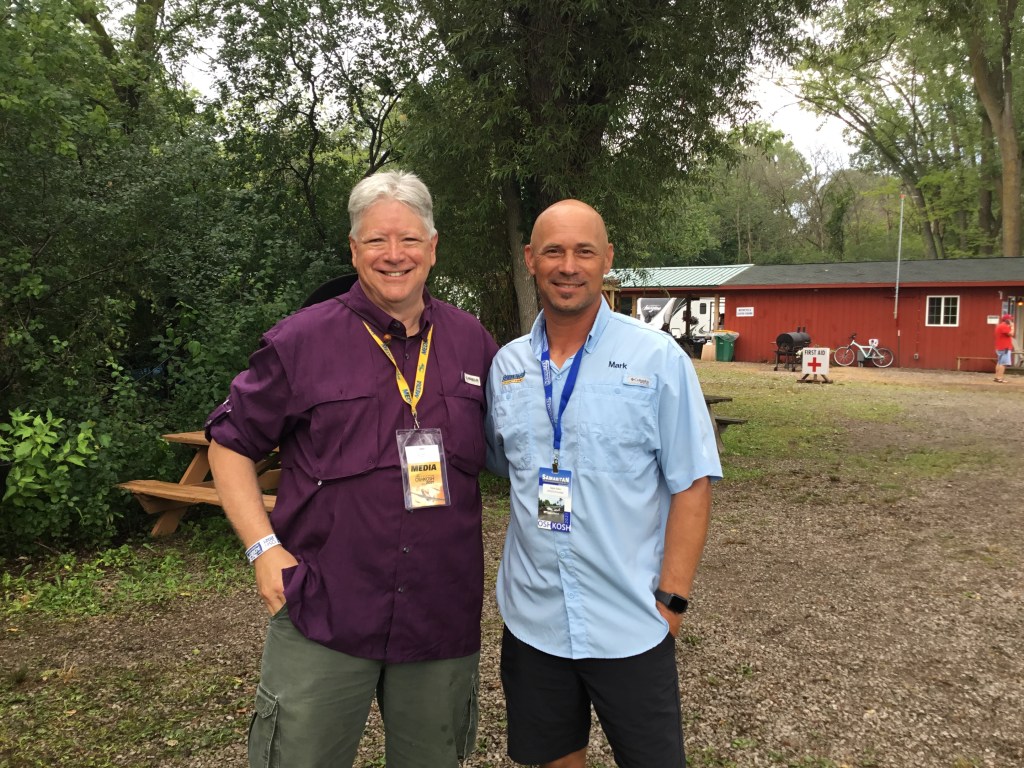
Mark Palm and the author at OSH21

 Mark and other SA team members have built a close-working relationship with the government of PNG and it now provides funding that equals about twenty percent of the SA budget.  Mark stated that he felt it was important that the government demonstrate its support for its people through taking some financial responsibility for the service provided because there is no one else providing the emergency air medical services delivered by SA.   The deep cooperation with PNG entities is also evidence through their close relationship and coordination with the hospital staff and other service providers.

Samaritan Aviation is open about its finances. Its financial statements are posted and available through a drop-down link on the SA website. 90 cents of every dollar goes directly to ministry.  6 cents goes to administrative overhead, and four cents goes to fundraising.  They have been awarded the Platinum Seal of Transparency, which is rarely given.

Ways to give

Samaritan Aviation accepts monthly donations, gifts for specific projects and items, one time gifts, or a program that interests me the most:  Fuel for Life.

Courtesy Samaritan Aviation

Fuel for Life asks donors to donate one barrel of aviation gas per year. (They have to ship avgas in by the barrel because it not otherwise available.).  At the end of 2021, each barrel cost $600 U.S. They burn 250 barrels of avgas a year.  So, if 250 people will give $600 a year their needs for fuel would be met. (At least before the recent price increases in 2022.) It does not have to be given all at once.  A $50 per month donation would buy one barrel of fuel per year.

You may explore options to donate at https://samaritanaviation.org.

Charitable aviation is a resource we all need to both respect and support. I hope you will consider supporting this charity which has earned my trust and respect – and I don’t give that out lightly!

Until next time:

Clear skies and tailwinds!

Gary Risley

©March, 2022 RizAir Blog 21

ORBIS – HELPING THE WORLD SEE

The Orbis MD-10

Noun

orbis m (genitive orbis); third declension

  1. circle, ring
  2. a circular motion
  3. a rotation
  4. a disc or disc-shaped object
  5. the Earth, the world, the globe [often written as orbis terrarum]

totus orbis terrarum

the whole wide world

https://en.wiktionary.org/wiki/orbis

Well, you could not miss it, that was for sure. The Orbis MD-10, that is. It was the place where the press tours were being given at Wittman Field, Oshkosh, Wisconsin the day before AirVenture 2021 opened (#OSH21). The “MD-10” is unique in that FedEx converted its DC-10 fleet to a MD-11 cockpit format, eliminated the flight engineer, and, thus, the MD-10 was born.  The airplane was donated by FedEx and the engines by United Airlines.

The MD-10 cockpit. A DC-10 with a cockpit upgraded to a MD-11 configuration.

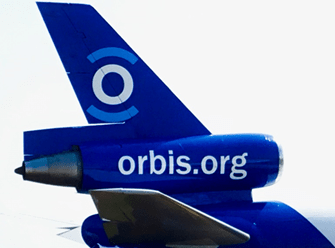
The plane was parked on Boeing Plaza, and as Annette and I entered one of the side gates, there standing above everything, was the giant engine located in the vertical empennage with the Orbis name.  Pretty impressive right off the bat!  It would only become more so as we went through the tour, viewed the hospital facilities, met staff and crew, and came to understand the mission.

Who They Are

Orbis is a charitable organization whose goal is to address the lack of medical services for those needing care for eye diseases.  The Orbis MD-10 is a certified flying surgical center and hospital (more on this remarkable aircraft later). While treating eye disease is part of their mission, the primary focus is training doctors in the areas they serve to treat the patients in their respective locales.  It is putting the “Teach a man to fish . . . “proverb into practice.  Planning to go to a country with a need is often an 18 month planning process.

The organization started out with a DC-8 in 1982, then moved to a DC-10 (which is now in the Pima Air Museum in Tucson, AZ), to their current aircraft.   While there is no official connection, FedEx and its employees are big contributors and constitute many of the aviation-related volunteers who serve Orbis.  The current aircraft and its predecessor were donated by FedEx to Orbis upon retirement of the planes from the FedEx fleet.   Other corporate sponsors provide in-kind materials and engineering and other support to keep the aircraft and the medical equipment up and running.  Individual monetary donations are a very important component to funding operations because Orbis does not charge for the services and training it provides.

While the aviation-side is important to the operation, the heartbeat of the organization comes courtesy of the medical professionals: the doctors, nurses, assistants and techs.  They provide the services and training that accomplish the mission: Eye Care Everywhere.

What They Do

As one might expect, pilots are always concerned about things that might affect their vision because without good vision they will lose their medical certificate and be unable to fly.  Therefore, one might expect them to appreciate greatly any program that seeks to preserve or restore vision to people.  Of course, pilots are not alone with this concern because most of us have lives and careers that would be impacted by a full or partial loss of vision.  I suspect few readers have not personally suffered or had a family member who has suffered from vision issues.

Now, imagine that you live in one of the less-developed nations of the world.   Vision problems that are routinely treated in modern, industrial countries are life-debilitating issues in such areas. Lack of facilities, lack of medications, and lack of trained professionals all contribute to this difficult situation.

Enter Orbis. 

Orbis uses state of the art technology and tools to train doctors in countries all over the world to treat and prevent eye diseases.   Over the years, Orbis has been able to set up learning centers in many parts of the globe and reach others through distant learning via the internet.  Today, the massive McDonnell-Douglas aircraft provides about 25 percent of the training being performed by Orbis and operates approximately 100 hours per year flying time.

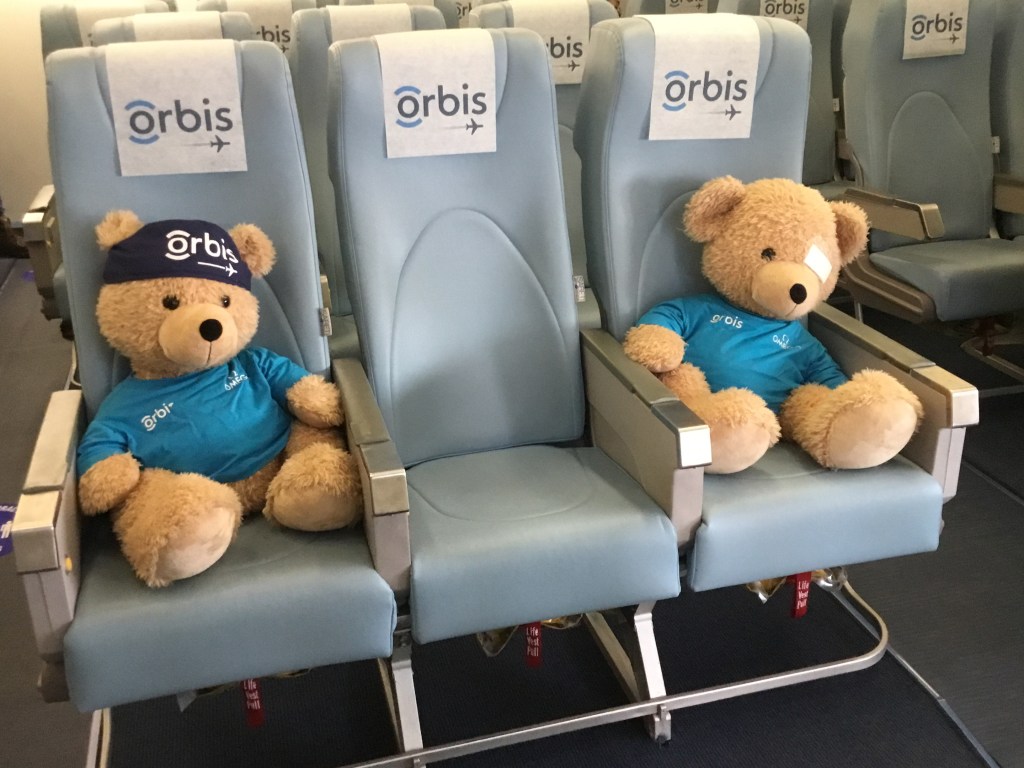
Seymour (“See More”) the bear used to comfort children

How They Do It

Captain Cyndhi Berwyn, a volunteer pilot for Orbis, and whose “day-job” is a trainer for the MD-10/11 for FedEx, kindly volunteered to be our tour guide.  Captain Berwyn informed us that the MD-10 is a certified, flying hospital.  Medical and aviation professionals from all over the world volunteer their time and skills to Orbis to help the less fortunate have access to medical care for vision problems.  From the most highly-skilled doctor who is doing the instruction, the surgical assistant nurses, the flight crew, down to the airframe and powerplant mechanic who is in a tiny room in the belly monitoring all the systems while all the work upstairs is going on, each person makes up an essential cog in the well-oiled machine that is Orbis.The pilots are volunteers who are current or retired FedEx pilots.  They do emphasize that when flying for Orbis that are not “FedEx pilots”, they are flying on their own certificates, and they are flying according to Orbis criteria, not that of FedEx.

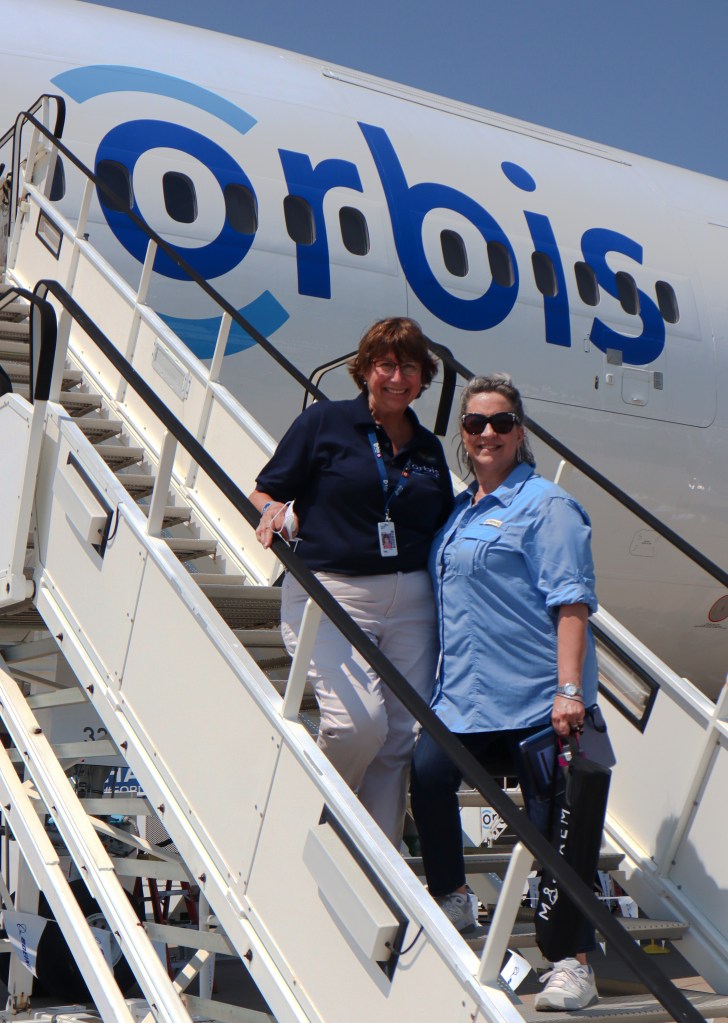
Capt. Cyndhi Berwyn and Annette Risley

 If you go to a remote country to teach and treat, you better bring everything you might need to do the job, including your own electricity. 

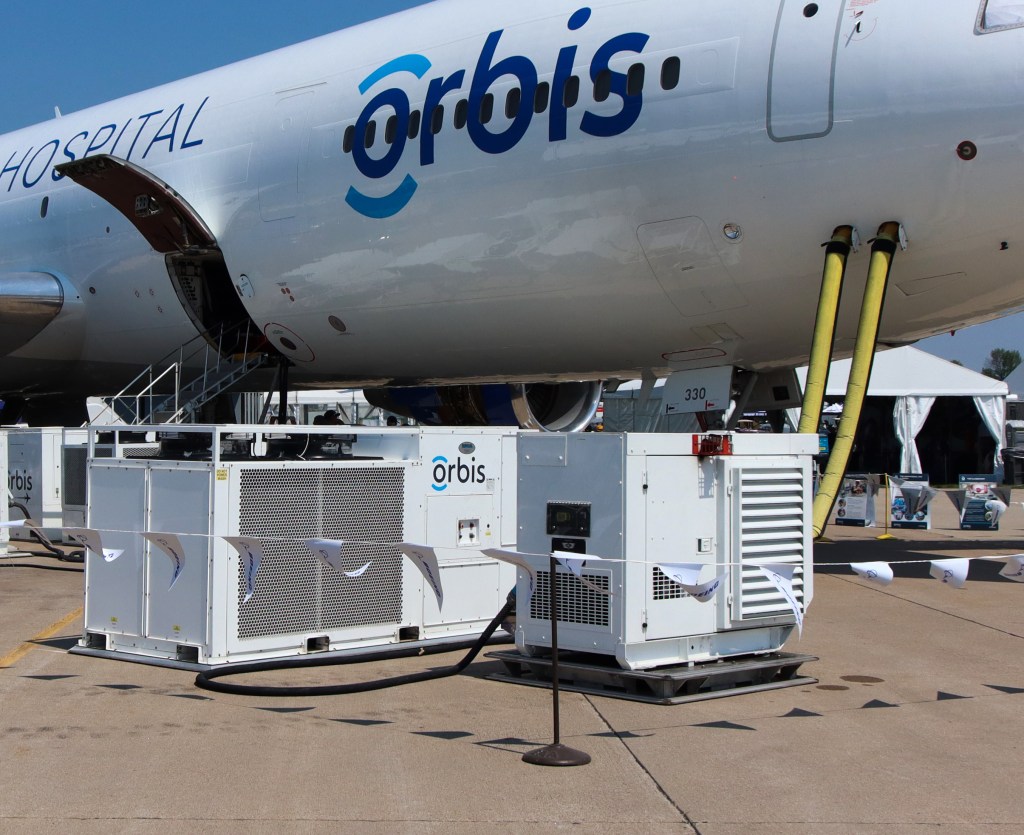
               The hum of the giant generators located next to the plane could be heard a hundred yards away. Captain Berwyn explained that the generators draw fuel from the fuel tanks of the airplane, and are always up and running while the aircraft/hospital was on station, which can be thirty days or so.  When traveling, the generators are cranked up and stored in the giant belly of the beast. 

               The generators are needed because the reliable electricity we take for granted here in the United States does not exist in most of the world.  The surgery center is heated or cooled to 68 – 72 degrees Fahrenheit, the recovery room needs to be comfortable, medications must remain protected or refrigerated, and the audio/visual system needs to be up and running for the doctor-students who are watching the procedure on high-definition televisions in the classroom and as they listen to the doctor-instructor concerning the procedure. The generators guarantee all of the foregoing will be accomplished.

The Orbis generator system.

Entering the aircraft at the front and turning to the right, one enters a large state-of-the-art 48 seat classroom.  Students here are able to watch surgical procedures, listen to the instructor comment, and ask questions as procedures are taking place.  If only my classrooms through all the years had been as well-appointed as this one! 

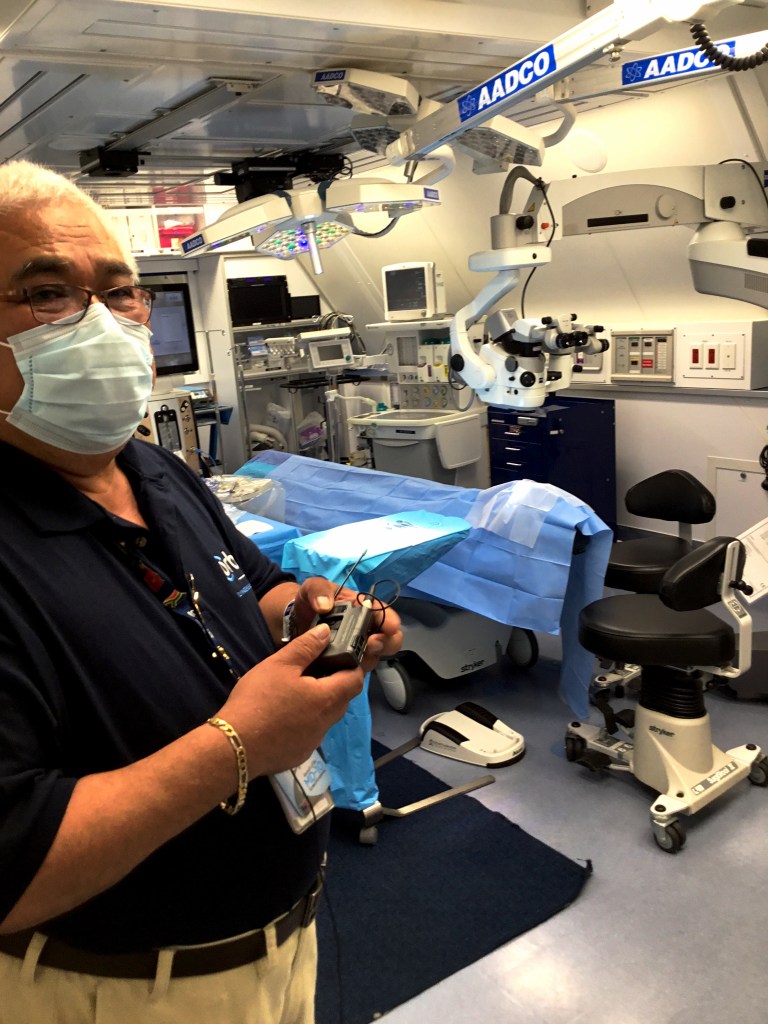
Further back, on the starboard side of the airplane, to your left as you walk to the back, there is an administrative office, an audio/visual room, a patient intake center, an evaluation/laser room, and a surgical center.  The sealed room that is the surgical center is state of the art for eye disease care and the operating room staff are some of the most elite professionals in the world.  Doctors and staff come from all over the world, and often more than 20 different languages are being spoken by people on the airplane.  “Students” are brought in and assist with the procedures as they learn.  Staff often work in local hospitals as well as on the aircraft while on location. 

Longtime surgical nurse in the surgery center.

What is unique is that all of the interior “systems,” other than the classroom, – the surgical center, for example -, are “cans”. A suite in a box so to speak.  So the surgical center and other interior items can be rolled on and off like cargo containers.  This greatly simplifies mission availability because supplemental type certificates are not required since the operating theater and its supporting infrastructure never become part of the airplane.  Just roll it on, lock it down just like a cargo box, do a new weight and balance, and away you go.

The on-board recovery room.

Unlike the one tank on the basic DC-10, the hospital has 6 water tanks. The “hospital” has its own water filtration system on a pallet that can handle just about any water wherever you may find it and purify it to medical grade standards.  The HVAC system is on a pallet (again, no STC required) as are other mechanical systems supporting the hospital.  Truly well-designed and engineered.

The Airplane:

Captain Berwyn acknowledged that the Orbis MD-10 is always a “heavy” airplane and it flies like one.  No light and nimble fighter jet performance here.  It is, however, an airplane that has been customized for its mission through the generous donations of many people and corporations.

Although it is a Part 91 operation, Orbis has its own set of operating specifications, maintenance procedures, and other criteria much like scheduled Part 121 carriers use.  They do have paid maintenance staff (not a lot, but some), and they try to do all the maintenance on the aircraft themselves other than the “heavy” checks.  (If you are not familiar, larger aircraft often go through a series of “phase” checks based upon either calendar time or flight hours, or both, and these are often referred to as “A”, “B”, and “C” checks.) Two to three A&P mechanics tag along on trips to monitor the airplane, repair what can be done in the field, and to monitor and maintain other equipment, including the critical generators. 

The Orbis MD-10 three-quarter view.

The MD-10 has a max gross take-off weight of 565,000 lbs and a payload capacity of approximately 65 tons.  That is a lot of tonnage, but a flying hospital requires a lot of equipment, space, and support systems, and the MD-10 very neatly fits the bill to fulfill this very important mission.  Its three GE CF6-50C2 turbofans put out 54,000 lbs of thrust each.

In addition to the photographs in this article, I had intended to post video of the aircraft, but there are several YouTube videos that have been posted by more professional production organizations than I, so here are several links:    https://www.youtube.com/watch?v=JmvJ0Zyd8AU&t=335s by Angle of Attack (www.angleofattack.com); https://www.youtube.com/watch?v=68XQ7juRXgs by Steveo1kinevo; how the DC-10 was converted to a MD-10 by Aviation International News: https://www.youtube.com/watch?v=UVhjAYhGggY; https://www.youtube.com/watch?v=4ROqLhT9a34 by Socialflight, and a Aviation Week report: https://www.youtube.com/watch?v=sAxkGTkvVkQ.

How It is Funded.

Orbis is an efficient charity.  Ninety-two cents of every dollar donated goes directly to its surgery programs.  It is 100% donor supported.  The “Flight For Sight” donation plan allows you to donate $20 per month.  At the end of one year, you will have donated enough to power the Flying Eyes surgery programs for an entire day. You may give at: www.orbis.org.

Until next time:

Clear skies and tailwinds.

Gary Risley

#charity #aviation #orbis #Airventure #OSH21 #flyinghospital #EAA #charityflights #volunteerflying #airmedical

Copyright November 2021 (No intent to claim copyright to linked videos or information.) All photographs by the author. Video produced by parties identified in the article.

The On, Off, and On Again Vacation

(A/K/A The Joys Of Owning A Small Business!)

Ahh, the joys of owning a small business!  From television and public perception you know what they are: 1. You are instantly rich when you start a business; 2. You have staff waiting on you hand and foot, 3. You take half days off anytime you want to do so; 3. There is an infinite money pot created by the massive profits your business generates so business costs don’t matter; 4. The government loves you and your business and does anything it can to make your life easier.

The reality is: 1. You have gambled your life savings in the hope (and belief) you can make a go of it on your own; 2. If you have staff, they are so busy working on their assigned tasks they don’t have time to be your waiter or waitress; 3. Margins are thin and you just hope you can make payroll and the rent some months; 4. Government bureaucrats, most of whom have never worked in a private business much less run one, are more than happy to tell you how to run things and run your costs up with no corresponding increase in revenue to compensate.

So, did you ever try to take a vacation while working for yourself?  There are no paid vacations for the self-employed.  Clearing the calendar, making sure things can keep functioning while you are away, working long hours to get things done so deadlines don’t lapse while you are away, making sure payroll is covered, etc. etc.  But this is supposed to be an aviation-related blog, you declare, so why all the whining?

Well, dear reader, you needed a bit of background to set the stage.  I am an attorney in solo practice.  It is a paralegal, a receptionist, and me.  It is a lean operation and each cog in the wheel is important.

 I enjoy going to EAA Airventure in Oshkosh, Wisconin (#OSH21) whenever I can.  After no event last year, and a demanding year at work, I was looking forward to meeting up with the Cherokees To Oshkosh gang at Central Wisconsin Airport near Mosinee and Wausau, Wisconsin.  After getting a refresher on formation flying, the gang was scheduled to fly in on the Saturday before #OSH21 opened.  I was a bit delayed in committing this year because of a family situation and work.  In March, the “go” decision was made and the plans were made.

 I managed to get a rental car in OSH itself. (Don’t ask me how much it cost per day!), my wife found a wonderful Bed and Breakfast in nearby Green Lake, tickets to the event bought and paid for on-line, and, believe it or not, EAA was kind enough to grant me a media pass.  As time marched toward our planned departure date, RizAir1 was checked and rechecked, instrument flight rule currency and proficiency was focused upon, interviews for the blog were arranged, etc. etc.  Everything is a go!

 Two weeks before our departure  date (the Tuesday the week before I was to head toward #OSH21 and the CTO mini-clinic), my long-time paralegal returned from her vacation and told me that evening that she was accepting another job in a nearby city.  KA-BLEW-EE! All vacation plans up in smoke!  The long-planned vacation is off!  Rental cars cancelled, CTO was notified I would not make for the formation fly-in, and the scheduled interviews were notified that I would not be coming after all.

I would be spending my planned vacation time reviewing resumes and interviewing prospects for replacement.  Finding good, experienced paralegals is hard; especially, in small towns.  The relationships between attorneys and paralegals is similar to that of doctors and nurses who assist them.  You learn how you each like to do things and can anticipate the next move.  Chemistry is very important.

Out go the “help wanted” advertisements on Indeed and other services.  In come pouring the applications.  More than 45 resumes were received in less than 48 hours.  Want to know how many meet the very minimum of qualifications?  3 to 4.  Not looking too good. 

 Well, the Lord looks out for fools and idiots, and I qualify on both counts.  A day or so later, a resume came in that looked good, very good.  The employment assessments came back with excellent scores.   “I have to get this woman in here before she escapes somewhere else,” I thought.

 The interview went well.  On the evening of the Tuesday I was supposed to have left for Oshkosh, I made an offer of employment and it was accepted.  Hallelujah!  At least I would not be trying to run a law practice without a legal assistant for a month or more.  She could not start until the Thursday after my other paralegal left, but that was a minor matter compared to having no one, or having to hire a person with lesser skills, so things were looking good.

At almost midnight on Tuesday night, I broached the subject about heading out to #OSH21 on Saturday to my wife.  She had been deeply disappointed about the cancellation as well.  She said, “Well, I am glad I didn’t cancel our B&B reservations.”  Good news, at least we had a place to stay!  BUT, how to get to the B&B and back and forth each day to the airshow?

 I began looking for rental cars.  The closest place was Stevens Point, Wisconsin.  I have been to Stevens Point a few times before, and it is a great airport with excellent fuel prices, but it is an hour and a half to two hours from Green Lake.  Bummer!  But beggars can’t be choosers, so we reserved the rental car and made arrangements for the keys and paperwork to be left with the FBO at the airport.  (Again, don’t ask the cost!) RizAir1 would not be landing at OSH this year but would get us into the neighborhood.

 My departing paralegal was excellent at holding the office together while I was out of the office, and even though it was her last week of work for me, she coordinated with me on plans for the week I would be gone, and on organizing files for the transition to the new person. 

Now, trying to get things done in two nights after work when you had planned to spend most of a weekend doing so became a bit of a problem, but, somehow, we managed to get things organized. The plane was fueled and pre-flighted the night before our departure and our luggage was packed.  Looking for a pre-dawn departure to beat the afternoon heat and clouds was a goal.  The alarm was set for 4:30 a.m. and I went to bed by 9 p.m. on Friday night.

Up early on Saturday morning.  Weather briefed and IFR flight plan filed to Kit Carson Airport in Colorado for the first fuel stop.  We would, as is often the case, be popping in and out of clouds as we got near Alamosa and crossed La Veta Pass. (See The IFR Rating as the “Keys To The Kingdom” https://rizair.blog/2020/07/28/getting-the-keys-to-the-kingdom-the-ifr-rating-for-private-pilot-aviators/)

The plane was loaded, the fuel was strained, and last-minute bathroom runs done.  Pre-flight selfie – done.  Passenger and crew on board, engine start, ATIS received, IFR clearance obtained, taxi to runway 7, and airborne at 6:21 MDT. After our fuel stop at Kit Carson, we hopped over to Storm Lake, Iowa to top off again. (We could have made it with one fuel stop if we wanted to stretch things and our bladders.  A one-stop plan would leave an hour’s reserve at Stevens Point on a VFR direct plan, but would not have been adequate in the event instrument conditions existed. Therefore, the more conservative flight plan.)

Kit Carson Airport in Colorado

I enjoy landing at smaller airports in the Midwest.  A great many of them are the home of crop-dusters, and there was activity at both airports.  Crop-dusters are usually flying low and slow, and often don’t use radios coming into their home field, so eyes are open and very active scanning takes place.

Storm Lake Iowa

Once we were past La Veta pass, it was a beautiful VFR day.  The airports in central Wisconsin had been marginal VFR to IFR that morning, but things had cleared out by the time we were wheels on at 4:30 CDT (3:30 MDT) in Stevens Point.   Nine hours from wheels up in KFMN to touchdown in KSTE, which included a sack lunch meal break at one of our fuel stops.  Not bad for a trip that takes about 30 hours to drive.

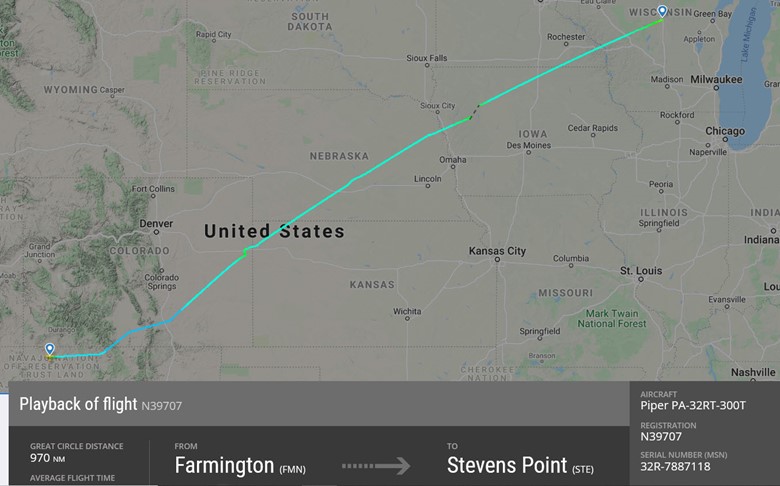
FlightAware screen shot of our route from KFMN to KSTE

We were two things on arrival at KSTE: hungry and thirsty!  After getting RizAir1 securely tied down, and loading the rental car, we hit up Google to find us someplace, anyplace, to eat. After a good meal and drinking a gallon of iced tea, we hit the road to Green Lake.The pleasant drive brought us to a beautiful old mansion that has been converted into a B&B.  The accommodations at the Greenway House were great, the staff wonderful, and we were all set to begin our highly anticipated time at EAA AirVenture (#OSH21).

Greenway House B&B Green Lake, Wisconsin

  (https://greenwayhousebandb.com/)

I hope you will join us as I relate the stories of the wonderful organizations I was introduced to and the people I met at AirVenture.  I will be posting through the coming year stories of perseverance and determination, of human interest and service to the less fortunate, of youth and their dreams, seniors who lived the history we all know, and an organization or two involved with aviation of which you may have never heard.  It will be fun, and I will try to make it interesting, so come along for the trip!

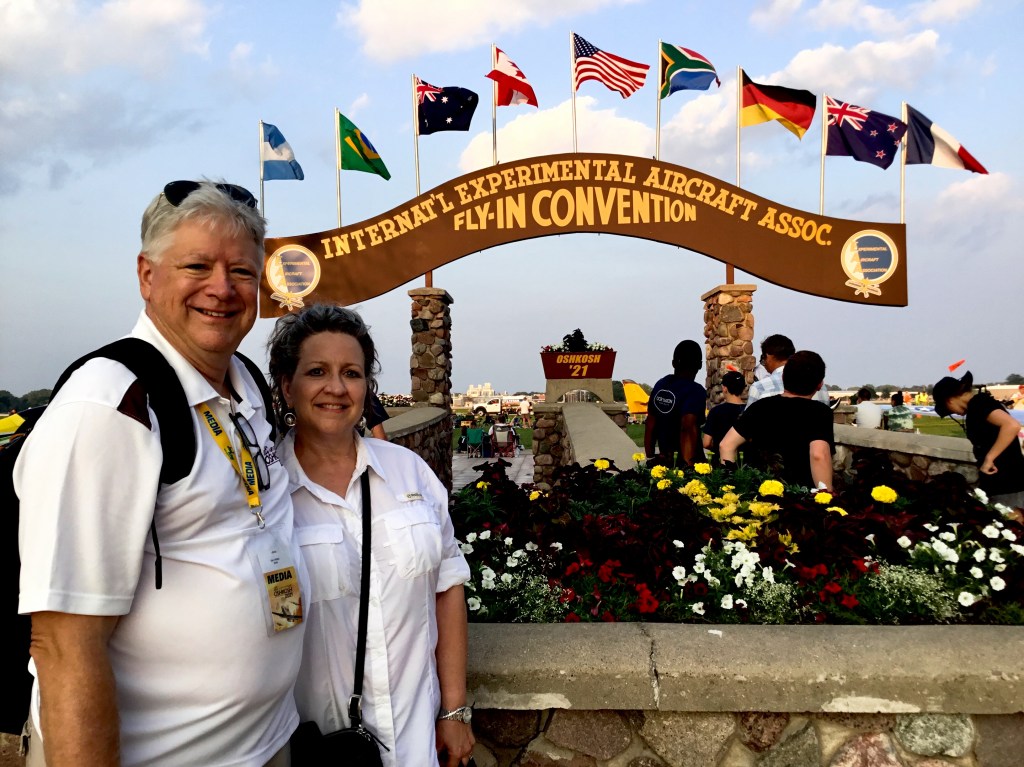
Gary and Annette In Front of Famous EAA Airventure Brown Arch

Until then:

Clear Skies and Tailwinds

Gary Risley

© RizAir Blog 19, August 15, 2021

 #OSH21 #flywithaopa #pilots #Oshkosh #EAA #generalaviation

TRAVELING SAFELY IN A COVID-19 WORLD

As this blog is being written late in the Fall of 2020, all of us are suffering from the impact that the Covid-19 pandemic on the United States and the rest the world. Despite your personal views of the nature of the disease, its risk to our society, and what action should be taken, if any, to protect the public, we all have to live with rules and regulations that are set in place by our local and state government officials. Those rules have greatly impacted travel throughout our country, and Covid-19 has placed the airline industry on the point of bankruptcy.

Many of us have reservations about being confined in a long tube for 2 to 4 hours at a time with a group of strangers, one or more of whom will be sitting a scant 6 inches from our elbow. The at-risk population, particularly seniors, are understandably concerned about climbing aboard an airliner under these circumstances. They are also concerned about being in airport terminals and other areas where many people congregate, and those concerns will continue for quite a while longer.

So how can one travel over longer distances while reducing potential exposure to the COVID-19 virus and quite possibly do so in less time than by a commercial airline? Private aviation, of course! Private aviation, along with private charter aviation, provides a means to control your risk of exposure because you select with whom you travel and you are passing through lesser-congested general aviation terminals and facilities.

CRUISING IN COMFORT

Over the past several months, I’ve been able take advantage of private aviation to see my two sons who each live a substantial distance from my home in the Four Corners area. We were able to do so in a manner that put us less at risk than going to the local big box store.  How are we able to do this in a Covid-safe way?

In preflight planning, I looked for opportunities to refuel enroute that would reduce our human contact with others. For our trip to Iowa, we made sure to pack our lunch, bring plenty of water bottles, and I planned our fuel stop at an unattended airport that had self-service fuel. Upon landing in Iowa, our son picked us up at the airplane, I provided my contact information and other pertinent information concerning the tie-down of the airplane to the FBO by telephone, and we proceeded to his house with literally no non-family contact.

KFMN TO KRCP KANSAS ENROUTE TO DES MOINES

After a wonderful, long weekend visiting the grandkids, Annette and I mounted up for the return to the Four Corners. Contact with the FBO crew in Ankeny was minimal, I paid for my fuel (credit card slid across the counter at a respectful distance), and we were on our way. At our fuel stop in Scott City Kansas, I taxied up to the self-service fuel pumps, but the line crew at A+ Aviation hopped right out to meet me, I handed them my credit card through the storm window on the airplane, they swiped it, handed back to me, and commenced to refuel my aircraft for me. The lady inside the FBO was behind a plexiglass shield and we had the FBO lobby to ourselves as we waited for the plane to be fueled. Again, minimum human contact, and we were on our way to home shortly thereafter.

One of the tragic circumstances of COVID-19 has been the continued isolation of our senior citizens, and the lost opportunities to visit with them and enjoy what are, for many, their last years. My in-laws had desired to see the Texas-based great-grandchildren for some time. As travel restrictions were lightened, they were giving serious consideration to traveling by airline to see them. Both my wife and I had serious concerns about them  as they are in their mid-to-late 80s, they would have to travel to a city that had a fairly high Covid infection rate, stay there overnight, spend approximately 2 hours in an airport terminal waiting on boarding, followed by an airplane swap with the corresponding hangtime in the layover terminal, before finally getting to their destination.

In light of those concerns, I offered to fly them to see my son, daughter-in-law, and, of course, the great-grandkids. They were happy to take me up on that offer. (Annette and I had made the same trip earlier in the year.)

IN-LAWS ENROUTE TO GREAT-GRANDKIDS

The flight from the Four Corners to an airport near my son’s home was five hours, just two hours more than it would have taken them to drive to Albuquerque to get on airline flight. Once again, by preflight planning, I took precautions to avoid human contact enroute. Lunch was packed, we landed at the Odessa airport and re-fueled at the self-serve fuel facility. The great folks at Texas Aero in Odessa, who own the self-serve fuel farm (I do not like to ask to use FBO facilities if I do not buy fuel from them), greeted us warmly from behind the plexiglass, we ate lunch at tables they had set up that purpose (which clearly had been sanitized recently), used the restrooms, and then were on our way. We did not pass within 10 feet of another person while doing so. Upon our arrival in New Braunfels, my daughter-in-law met us at the airport with the grandkids in tow, the in-laws hopped in the car, I took care of things with the FBO, and we were on our way.

After a great weekend with the great-grandkids, the return flight, with a fuel stop in Hobbs, New Mexico, was much the same as the trip down. We arrived home shortly after noon with minimal human contact throughout all legs of the trip to Texas. The trip in a car would have more than 18 hours, with numerous fuel stops, numerous meal breaks, and other events that would lead to a whole lot more human interaction.

COVID SUPPLIES FOR NAVAJO RESERVATION READY TO LOAD

The Navajo Nation, which is adjacent to where I live, was hit very  hard with Covid infections. How could personal protective equipment and other donated supplies reach the hard-hit areas of the Navajo reservation while minimizing people’s exposure to Covid? The answer, once again, is private aviation.

Angel Flight, in cooperation with “With Love, From Strangers”, organized flights of essential supplies to communities throughout the Navajo reservation. The flights utilized the airstrips that have been strategically placed throughout the reservation for purposes such as this.

The procedures regarding pickup and delivery allowed the pilots to minimize human interaction. Upon landing in Salt Lake City, masked and gloved individuals met us with organized packages based upon the weight limits of our aircraft, the product was loaded by those individuals, and after paying for fuel, we were on our way. Everyone was outside, people were wearing masks, and we were able to stay a substantial distance from each other.

PPE AND WATER ENROUTE

As we continue to trudge through a Covid- restricted world, if you are a pilot, look for ways that you can utilize aircraft available to you to assist those who might not otherwise be able to travel to see family, friends, or for medical needs. For those not yet a pilot, get started.  Travel by private aviation is a great way to protect yourself and your family as you travel.

Everyone should be aware of organizations such as Angel Flight which provide transportation to medical appointments for non-emergency patients in a safe, Covid-free environment through the donations of flight time by private pilots.

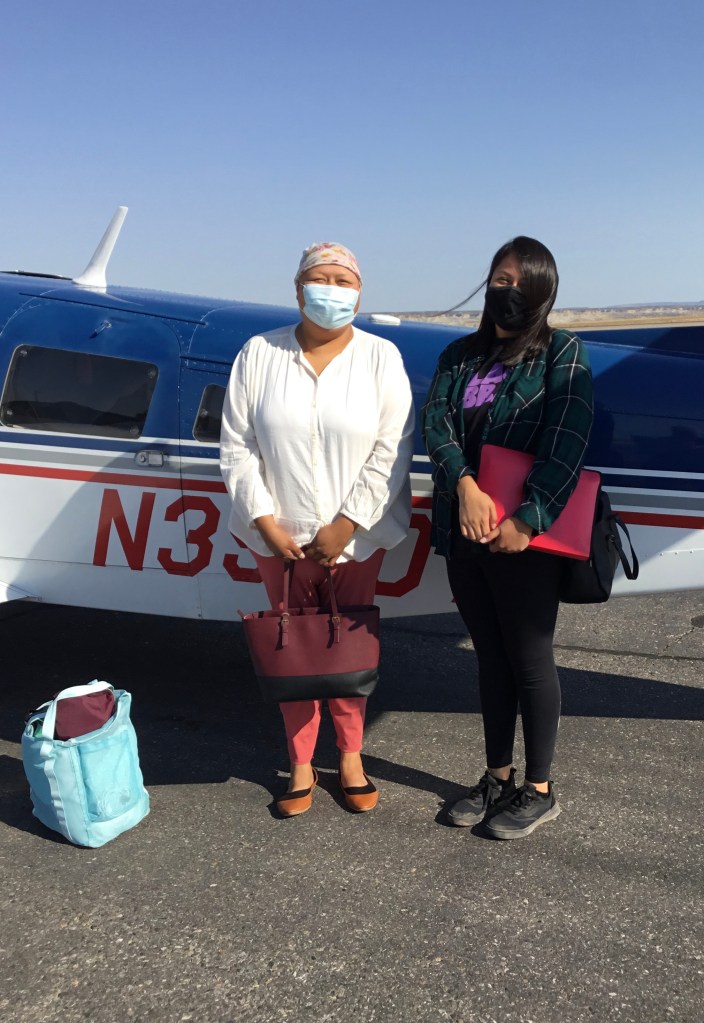
ANGELS ENROUTE TO CANCER TREATMENT

 Think about private aviation, or a charter operator, as an option next time you need to travel in this crazy world as we know it today.

Until next time, clear skies and tailwinds!

Gary Risley

RizAir Blog

©Nov. 2020

GETTING THE KEYS TO THE KINGDOM – The IFR Rating for Private Pilot Aviators

There is a rating for non-professional pilots that opens up a whole new world in private aviation.  It is a rating that allows you to go into airports that might otherwise be closed due to temporary security restrictions, that allows you to depart an airport when you might otherwise be stuck on the ground, that allows you to land where you otherwise might not be able to get in, and allows you to deal with unforecast weather on that long cross country. It delivers the keys to the kingdom – it is the instrument flight rules rating.

For the non-pilot reading this blog, when a pilot obtains his or her private pilot certificate, the privileges of the license are visual flight rules (VFR) only.  One may legally fly VFR so long as the clouds are 1000 feet above the ground and three miles visibility exists.  In the modern world of tall radio and television towers, electricity generating windwills, and tall buildings, marginal VFR flight must be undertaken with care, if at all.  Most pilots require much higher minimums for themselves before departing on VFR flights; typically, for example, clouds at 3000 AGL or better and 5 miles visibility or better.   (A lot of the terms used in this blog are explained in much more detail in IF YOU’RE GOING TO HANG WITH THE NATIVES YA GOTTA LEARN THE LINGO! (A/K/A AVIATION ALPHABET SOUP rizair.blog/2018/06/20/if-youre-going-to-hang-with-the-natives-ya-gotta-learn-the-lingo-a-k-a-aviation-alphabet-soup/ )

Weather is always a factor in flying.  While weather forecasting has improved tremendously over the past several decades, it still is an educated guess. While Sirius XM and ADS-B  in-cockpit weather in all sizes and makes of aircraft has greatly enhanced the ability to obtain accurate, current weather along a route of flight, one only sees the weather that is developing while enroute to a destination. Nexrad radar via ADS-B or XM can be 10 to 20 minutes delayed.  AWOS weather can be misleading because it often is reporting weather over the airport, and adverse conditions can exist just a few miles away.   With this in mind, one must always keep in mind the words of the late Richard Collins: “The weather is what you see out your windshield.”  Not what was forecast, not what you expected, what is actually present as we stare at the sky ahead and around us.

Without an instrument rating, unforecast and deteriorating weather can be a matter of serious concern, but it is a minor inconvenience, at the most, to an instrument rated pilot.  Glancing through my logbook, I see several occasions where my instrument rating made unexpected weather a non-event.  Flying into Abilene, Texas in a turbo-Baron at night, only to arrive and find a solid cloud deck with a ceiling of 800 feet AGL that was not forecast, is one instance.  I asked Abilene Approach to convert me to IFR and was issued the 17L localizer backcourse approach. (It has been replaced by a GPS approach these days.) The cloud layer was about 700 feet thick.  Down into the soup, line up on course, and pop out on final with plenty of room to spare.

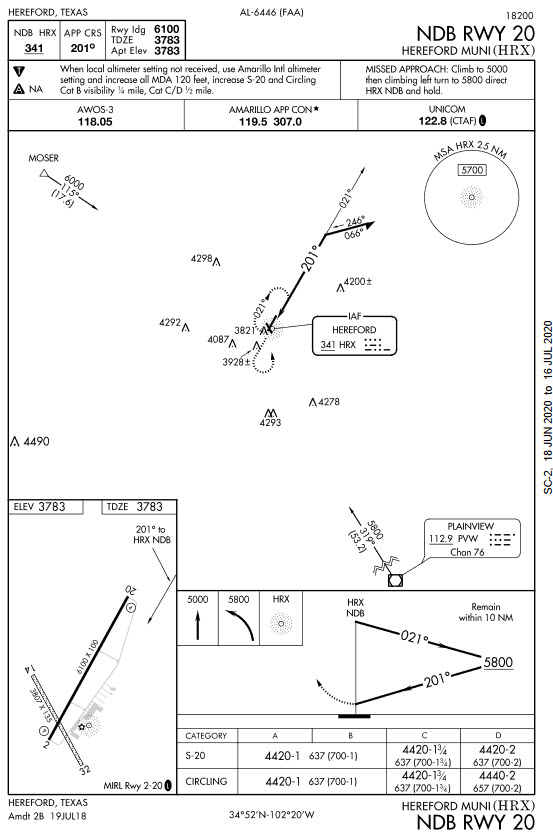
Another occasion was a trip to Graham, Texas (KRPH) for a family reunion at Possum Kingdom Lake.  I was in an A-36 Bonanza this time, but, guess what?  An unforecast broken layer 750 AGL above the airport.  No sweat.  Pick up a quick IFR and fly the NDB approach (yes, an NDB, this was before GPS approaches were available and LORAN was still a big deal), and we are on the ground and on the way to the lake.  The same thing has happened at Hereford, Texas (KHRX) (a half-way point fuel stop to KABI or the D/FW area) on more than one occasion; once again, both back in the day of NDB approaches and in the era of GPS approaches.

2020-07-05 Hereford Texas NDB approach plate

Still another occasion comes to mind.  This time I was on an IFR flight plan from KABI to KFMN (Farmington) in a BE58 Baron. The flight was mostly in VFR conditions. The weather at Farmington was forecast to be VFR.  At about 60 miles from the airport I was advised that the weather was at ILS minimums with light snow (again before real time cockpit weather – the plane did have a radar, but that did not help in this situation). Pull the plate, review the approach, and we were safely on the ground back home.

I could relate more stories regarding unforecast weather.  My IFR ticket made items that would have been of concern or undoable non-events and has opened up the skies to me when I might otherwise be grounded.

Beyond weather, IFR can make it easier to get where you want to go.  One example was related to the 2018 election cycle.  My son was finishing up medical school in Phoenix and my wife and I had planned a weekend visit.  (About a 2 hour to 2:15 hour flight.)  A problem cropped up.  President Trump was in PHX campaigning for candidates in Arizona.  This means a Presidential TFR (temporary flight restriction) was in place.

Presidential Temporary Flight Restrictions (TFRs) are a pain to plan for and fly around.  Part of the TFR moves wherever the president moves.  There are various “rings” involving a Presidential TFR.  Illegally fly one ring, and it will be an action against your certificate.  Fly into another and a fighter or Blackhawk will come greet you or worse.  There is a way around all the concerns and headaches, though: file and fly an instrument flight plan into your destination airport.

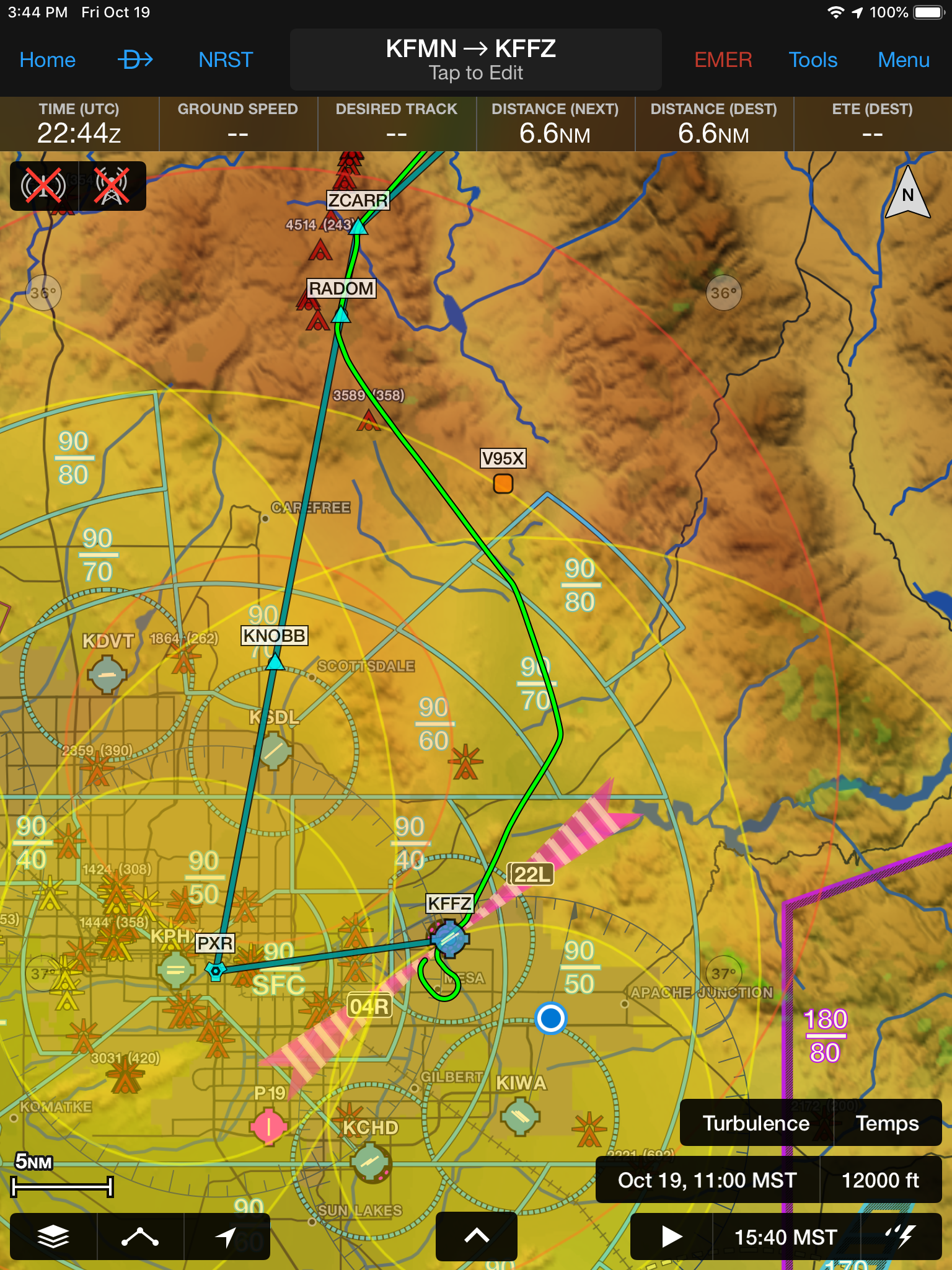
Here is the TFR over PHX in yellow and orange as displayed on Garmin Pilot.  The lighter green line is our flight in and the blue-green line is our departure route.

2018-10-19 presidential tfrs PhD area

The weather was severe clear and was forecast to remain so.  I read the details of the TFR.  I called a Leidos flight briefer who patiently worked with me to try to map out each of the rings, where the ring moved with the president at a particular time of day, and related issues.  It was like trying to throw darts at balloons blowing in the wind.  Ahh, but I had the solution in my back pocket – my IFR ticket.

Pilots on an instrument flight plan are exempted from the Presidential TFR restrictions so long as they remain on their instrument flight plan.  The FAA and the Secret Service, and who knows what other government agencies, know who you are, what you are flying, where you are starting, and where you are going. So long as I did not pop up on some terrorist watch list, everything would be easy.

I am glad to report all went well.  It was a severe clear day for the trip, I picked up my IFR clearance, departed into the beautiful high desert sky, and followed my routing to Falcon Field in Mesa, AZ.  After enjoying time with our son and his family, my wife and I departed by the same means we came – an IFR clearance.  The president was going to depart sometime after our scheduled departure, so the TFR was still in effect.  No problem.  We got our clearance and we were on our way.

An IFR clearance is a great way to go into big city airport space known as “Class Bravo”.  VFR traffic is not allowed into Class B airspace without a specific clearance to do so.  With an IFR clearance, it is like the Class B designation does not exist.  Your IFR clearance is your clearance in and through the Bravo airspace.

I recently used this technique for an South Valley SLC Utah Screen shot 2020Angel Flight into Salt Lake City.  I had not previously flow into the South Valley Airport which is located just a few miles south of the main Salt Lake City airport, is located in the Salt Lake Basin, and has a Restricted Areas immediately to its south.  The instrument clearance took me to my destination with no worries about Bravo airspace altitude restrictions ensnaring me, busting into restricted airspace, and put me on the right downwind for my destination airport.  I used the same technique for a flight to the McKinney, Texas airport (KTKI) last year.

Just because the sky is overcast does not mean the weather is bad for flying.   Stratus layer clouds may be thick but often are very smooth because they are normally present with stable air.  A trip that comes to mind  is when I was departing Ft Worth Meacham airport (KFTW) to Brazoria County near Houston.  I was going down to visit my uncle, Larry Risley, who was in M.D. Anderson for cancer treatment. (Larry and my Aunt Janie were the founders of Mesa Airlines.)  The clouds were 800 ft AGL and it was a solid overcast.

stratus clouds .jpg credit scijinks gov

We picked up our IFR clearance, took off, and hit the cloud deck at 800 feet AGL and I did not see the ground again until I was about 30 miles outside of Brazoria County Airport (KLBX), where the clouds became scattered.  The flight itself was smooth as silk.  On our departure a few days later, the same stalled front was present.  We took off from Brazoria, hit the clouds about 60 to 70 miles west of there and were solid IMC in smooth conditions almost to San Angelo, Texas.  The entire flight was made possible by an instrument rating; otherwise, my wife and I would have been trapped in Ft. Worth waiting for the weather to break. (Photo credit sjkjinks.gov)

RizAir1 frequently takes us on long cross-country flights in excess of 500 nautical miles.  On many occasions, a portion of the flight will be IFR due to a weather front, cumulus cloud build-up, or local area conditions.  I described such a circumstance in RizAir Blog 15, A Long Day’s Journey To Our Destination: Pre-staging For The Flight Into Oshkosh (https://rizair.blog/2020/02/17/a-longs-day-journey-to-our-destination-pre-staging-for-the-flight-into-oshkosh/), with regard to our leg from Fremont, Nebraska to Stevens Point, Wisconsin.  The IFR ticket, once again, makes such circumstances non-events.

I would encourage pilots who do not yet have an instrument rating to get one.  It does not matter if you are an old dog or a newly minted private pilot.  One of the leading causes of general aviation crashes is VFR pilots flying into instrument meteorological conditions.  The result is a loss of control of the aircraft.  Your IFR ticket will reduce concerns regarding weather, allow you to confidently launch on long cross-country flights, and it will make you a much better pilot.  IFR flying requires precision and the improved ability to control your airplane will make you a better pilot not matter what the meteorological conditions may be.  It will also improve your decision making along with your understanding of weather and weather systems.

An instrument rating truly gives you the keys to the kingdom.  It opens doors and opportunities you might not otherwise have in flying.  It will allow you to increase the utilization of your airplane and to do so more safely.  Oh, and one more thing, it greatly increases the fun and adventure of this thing we call private aviation!

Clear Skies and Tailwinds!

Gary Risley

Copyright July, 2020

Racing The Storm – The Cherokees Arrive at Oshkosh!

Racing The Storm – The Cherokees Arrive at Oshkosh!

Shortly before this blog was written, it was announced in early May that Airventure 2020 was being cancelled due to the Covid-19 pandemic.  This is a huge disappointment to hundreds of thousands of aviators and spectators as the Mecca of private aviation will not be open this year.  There are participants who plan their entire year around this fantastic event and the disappointment will be keen.

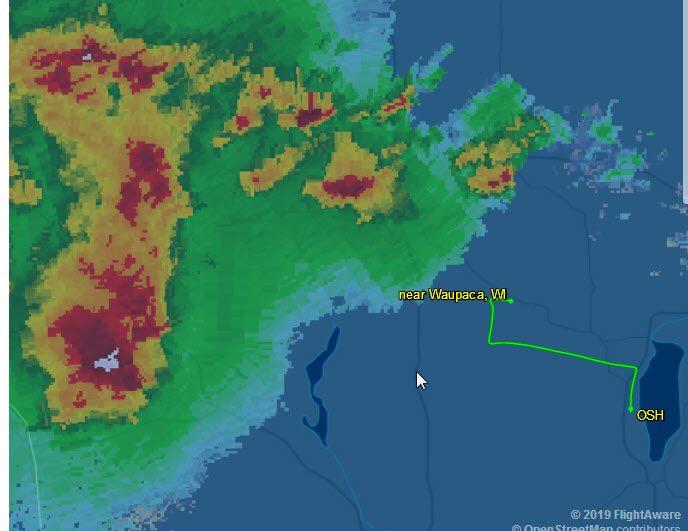
I will try to give a bit of the feel of the thrill of getting there in this blog.  In RizAir Blog 15, the adventure of traveling from Farmington, NM to the Cherokees to Oshkosh meeting point (Waupaca, WI) was described.  Having arrived after shooting the approach into a nearby airport and then a scud-run to nearby Waupaca, we retired to the hotel to prepare for the adventures to come the next day, Friday, when the practice run prior to the Saturday departure for Oshkosh would occur.

We awoke to a pleasant summer day in KPCZ, partly cloudy and warm, but not too humid in the morning.  The morning gathering and safety briefing was scheduled for around 9 a.m. Saturday morning and Annette, Ed, Jeanne, and I were there early.  As things geared up we were assigned our “flight” numbers and the people with whom we would be flying.  The planes would take off in groups of three, and there were 39 aircraft.

Pre-flight briefing – a key to safety of the entire group – July, 2019.

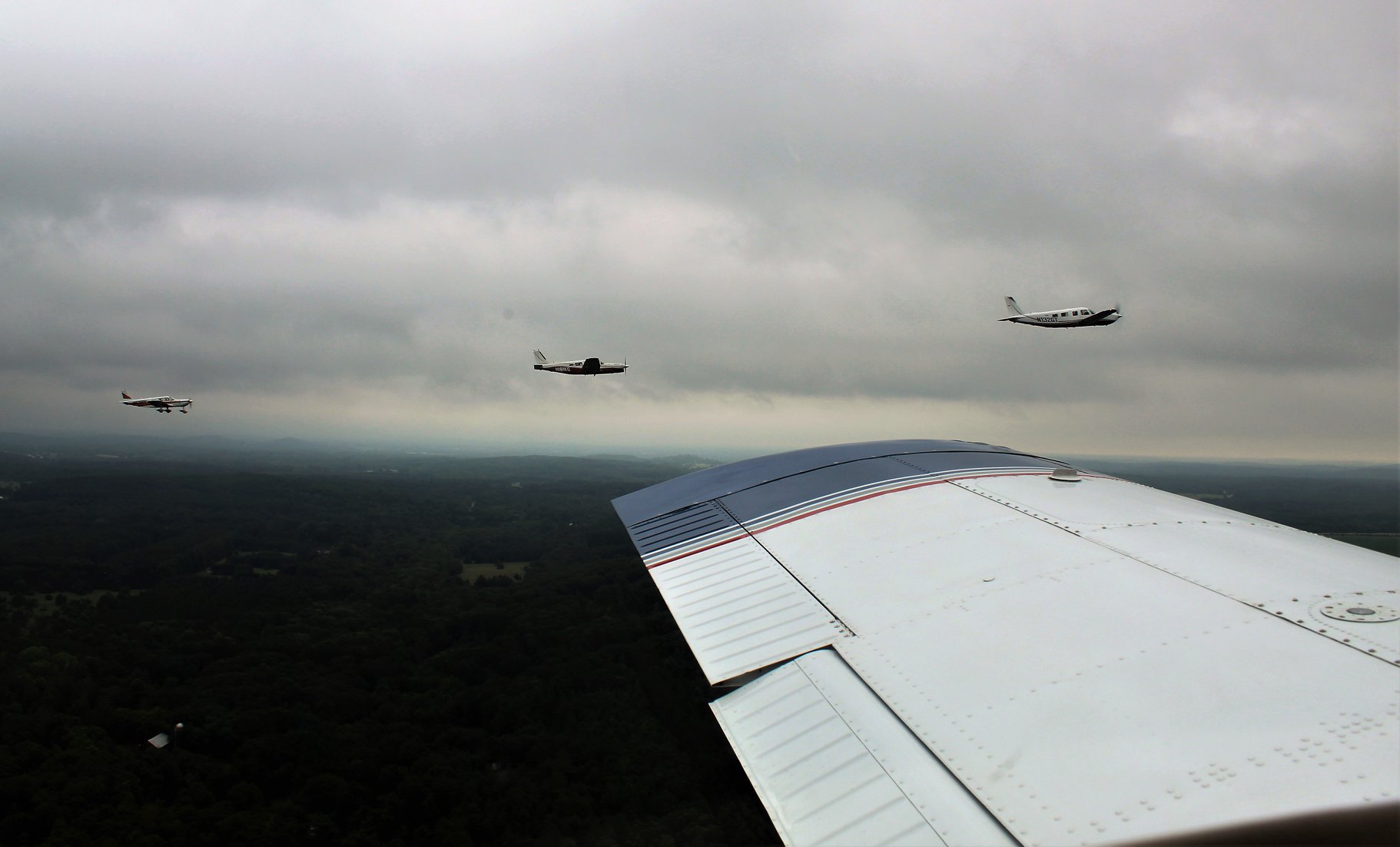
I was assigned Mike 3. RizAir1 would be flying formation with two turbo-charged Saratogas – one owned by another attorney and one by a medical doctor. I would be the last plane in the formation other than “Tail end Charlie”, call sign “Cherokee Tail”, a Cherokee 6 flown by the one and only “Ferg.”  I am sure that by putting me at the back they figured I could not do too much harm!

Actually, I was very fortunate because Chip and Dan were FAST (Formation and Safety Team) certified, which is unusual for guys flying Saratogas.  Most civilian formation flying is done with smaller and lighter single engine aircraft, the Van’s RV-6 being one example. Chip and Dan’s extensive experience and advice were very helpful to this rookie.

As I have stated in previous blogs, safety is always the number one priority.  We sat with our wingmates in our flight.  The safety briefing was direct and thorough.  The flight plan was laid out, and the “conga line” process to get the airplanes in order of departure was reviewed in detail and all questions answered.  The briefing was concluded, and we were dispatched to our aircraft.

A brief aside to compliment the manager and staff of the Waupaca Airport.  Bonnie was a gracious hostess and, visiting with her, one could hear joy and enthusiasm in her voice about hosting CTO once again.  Her attitude and that of her staff are greatly appreciated because one could see staff being annoyed at the extra work that such events bring.  CTO leadership makes certain to take care of Bonnie and clearly expresses our appreciation for what Waupaca does for us.

Back to the story:  Everyone was coming along for the ride on the practice run.  What a daring group of people! Ed Notson would be lending me his eagle eyes and keen observation skills up front.  My wife, Annette, and Ed’s wife, Jeanne, were “ballast” in the backrow seats.  Very soon it was time for engine start, everyone checked in by alphabetical order and number.  The check-in went smoothly, and the conga line started.  We were watching carefully for our wingmates, calculated our entry, and tried not to screw the whole thing up.  I guess that was one good thing about being at the end of the line.

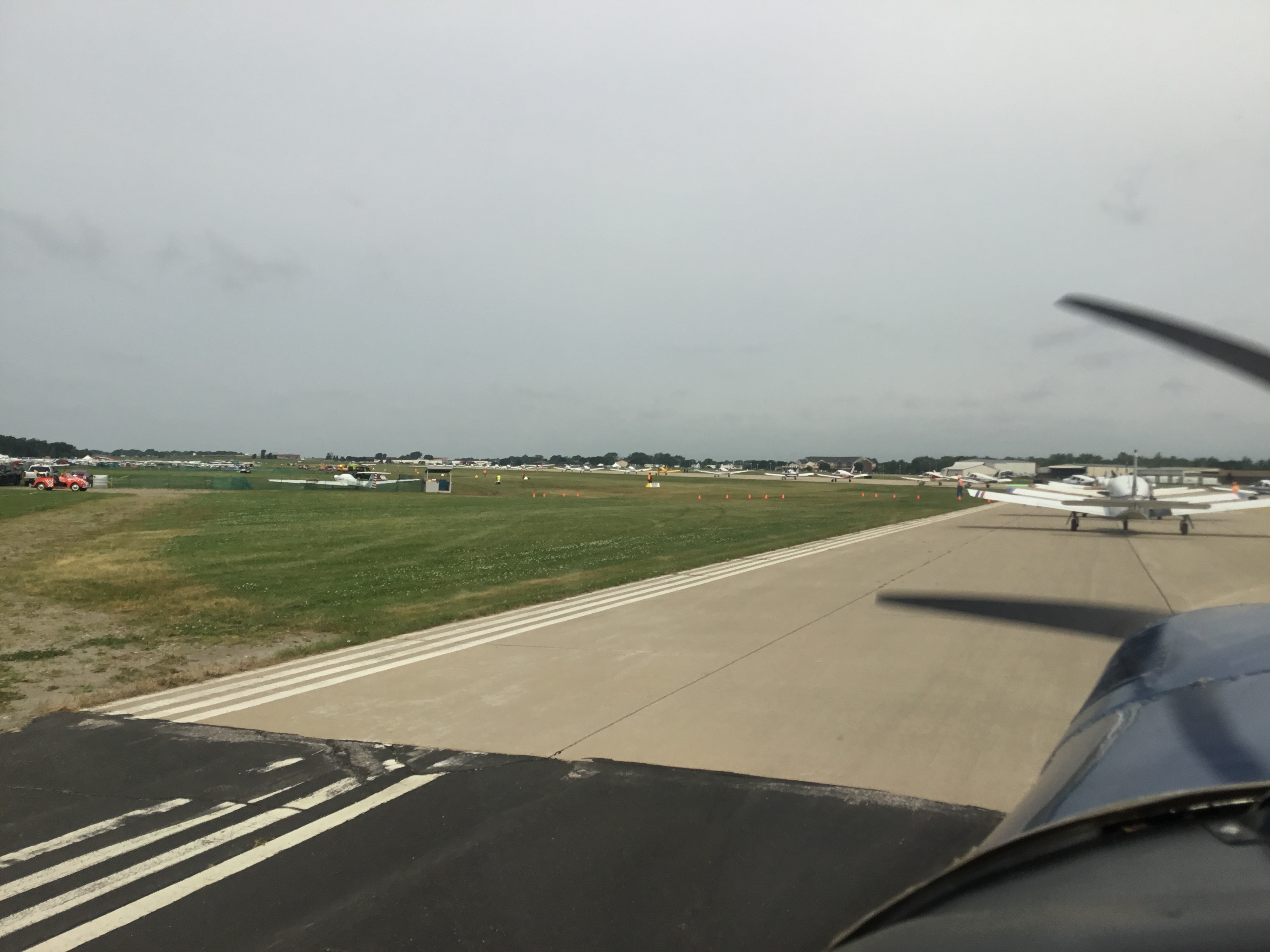
The conga line (a/k/a as the “baby elephant walk”) crossed the main ramp area near the fuel pumps, went behind a set of hangars to the departure end of Runway 31, taxied up that runway , and then onto the Runway  21.

2019-07-20 Conga line prior to departure

The baby elephant walk to the runway – July 20, 2019

There is a lot of prop wash at the end of the line once everyone is lined up on the runway.  Standard procedure is for the lead of a flight to roll about 15 seconds after the lead of the flight in front of him departs.  Number 2 in the flight counts five seconds from lead’s take-off roll beginning, and 3 follows 2 by five seconds. The take-off can be a bit interesting following 37 other aircraft.  Waupaca has a bit of wind shear because of a tree line, so the initial climb-out was a bit of a rodeo.  Following take-off, our job was to hustle up and settle into our number 3 slot off our lead.

The flight was a lot of fun.  Still need to work on those inside turns.  The approach to landing was a bit of an adventure.  Lots of wake turbulence.  One grabbed us and tossed us to the right.  I felt it coming and started putting in left aileron to counter, but with full left deflection the left wing was still rising and the right wing was dropping.  As airspeed dropped, I released back pressure and hit the left rudder hard, and we straightened up. A deep breath and back on course. The short final and flare were bumpy due to wake turbulence and wind shear (mild) at the airport.  It was not a pretty landing, but I was just wanting to get it on the ground.

2019-07-19 Final at Waupaca - hard right turn.

Getting tossed hard right by wake turbulence on final on the practice run – July 19, 2019.

Back safely on the ground, we went to debrief.  My first officer, Ed, a retired Air Force officer, commented he loved the debriefs because the comments were direct, issues frankly discussed, and no one got his feelings hurt.  Everyone was just wanting to get better, and the way the debriefs worked proved that point.  The flight was declared a success and a launch for Oshkosh proper was scheduled for the next morning.

Following a great banquet on Friday night, we arrived at the airport early on Saturday.  A low overcast was overhead.  The leadership was in fervent discussion regarding the weather and other matters. A storm was a’brewin’ to the west.

There were discussions about moving up the departure time, but after consultation between the powers that be, Air Traffic Control, FAA Safety Coordinators, OSH Tower, etc., the time remained the same. A very through safety briefing was held.  We would be flying low, but safely above the obstacles along the route.  The weather was expected to get worse later in the day.

Time to saddle the horses!  Ed and I went to the airplane and did a very through pre-flight on the damp ramp.  Mike 1 and Mike 2 informed us that they were going to perform a side by side take-off and would land the same way.  I would follow in trail as originally planned, and Cherokee tail would be behind me.

2019-07-19 Post brief prep for engine start Waupaca

Prepping the planes for engine start – Waupaca – July 2019

On cue, we started our engine and waited patiently as the call-in proceeded.  Finally, the time to call “Mike-3” came and we made the call.  With everyone up and running, the Baby Elephant Walk, modified from the day before, began.

Again, on signal, everyone turned 45 degrees to the center line and did a quick run-up to make sure the systems were running properly.  Then 39 aircraft squeezed onto the runway for a coordinated take-off.

Cherokee Lead started his take-off roll, and every 5 to 6 seconds after that, another airplane started down the runway.  Mike 1 and Mike 2 started rolling down the runway together, and my T-tailed turbo-Lance started chasing after the two turbo-Saratogas five seconds later. I was wheels up at 9:21 a.m.

Having learned from my experience the previous day, I was expecting a fair amount of buffeting and turbulence on the first few hundred feet of the climb out.  As the nose dodged left and right, I followed Mike 2’s sage advice and used only the rudders to combat heading changes.

Once we were clear of the trees, with a positive rate, the gear was sucked up and the race to catch to catch the rest of Mike flight was on!  The three of us were flying with flaps “one”, and we left them there for the duration of the flight, which was to be at 90 knots.  So, I ran at 109 kts (on knot below maximum flap extension speed) to catch up to my teammates.

2020-07-20 Mike flight and Cherokee tail

Photo courtesy of Ed and Jeannie Notson

Found them, caught them, and joined the formation!  We were on the way to Oshkosh!  The trip went well until we went into “trail” 3 miles from the airport.  As Mike 1 and 2 were descending for the runway side by side, a slower Cherokee popped up out of the brush (so it appeared) at a very low altitude.  Mike 1 and 2 executed an S turn to try to regain spacing.  I held altitude and slowed as much as I dared.

As Mike 1 and 2 were beginning their flare, suddenly a wingtip vortex grabbed Mike 1’s right wing and he was pushed to his left towards Mike 2. Mike 2 recognized the problem, poured the coals to his plane and executed a go around.  Quick thinking and excellent pilot skills saved the day there.

Like Mike 1, I was supposed to land on the right side of the runway, and Cherokee Tail was behind me.  Since I was close behind the other two, I made the executive decision to move to the centerline just before I flared because I was concerned the same vortex might grab me as well.  No problems with the flare, and we arrived safely at KOSH and rolled out to join our companions.  What a thrill it was to land at the home of Airventure!

Another conga line to parking on the grass.  Those of us with heavier singles were concerned about possibly sinking into the ground.  That is a particular problem for a T-tail since the nose wheel cannot be lightened by back-pressure on the yoke and running power to put prop wash over the elevator.  I knew that once I left the pavement I would have to keep moving.  I let extra space build between me and the airplane ahead of me.  When the turn came, extra power was applied, and we managed to get to the parking space.

IMG_0063

The CTO taxi-in at KOSH – July, 2019

Pushing the airplanes back into their slots was a chore!  It was hot, it was humid, we could look to the west and see a gigantic front coming towards us, and the grass was damp and the ground soft.  After much heaving and grunting, with the help of our fellow aviators, we got the birds all lined up.

IMG_0070

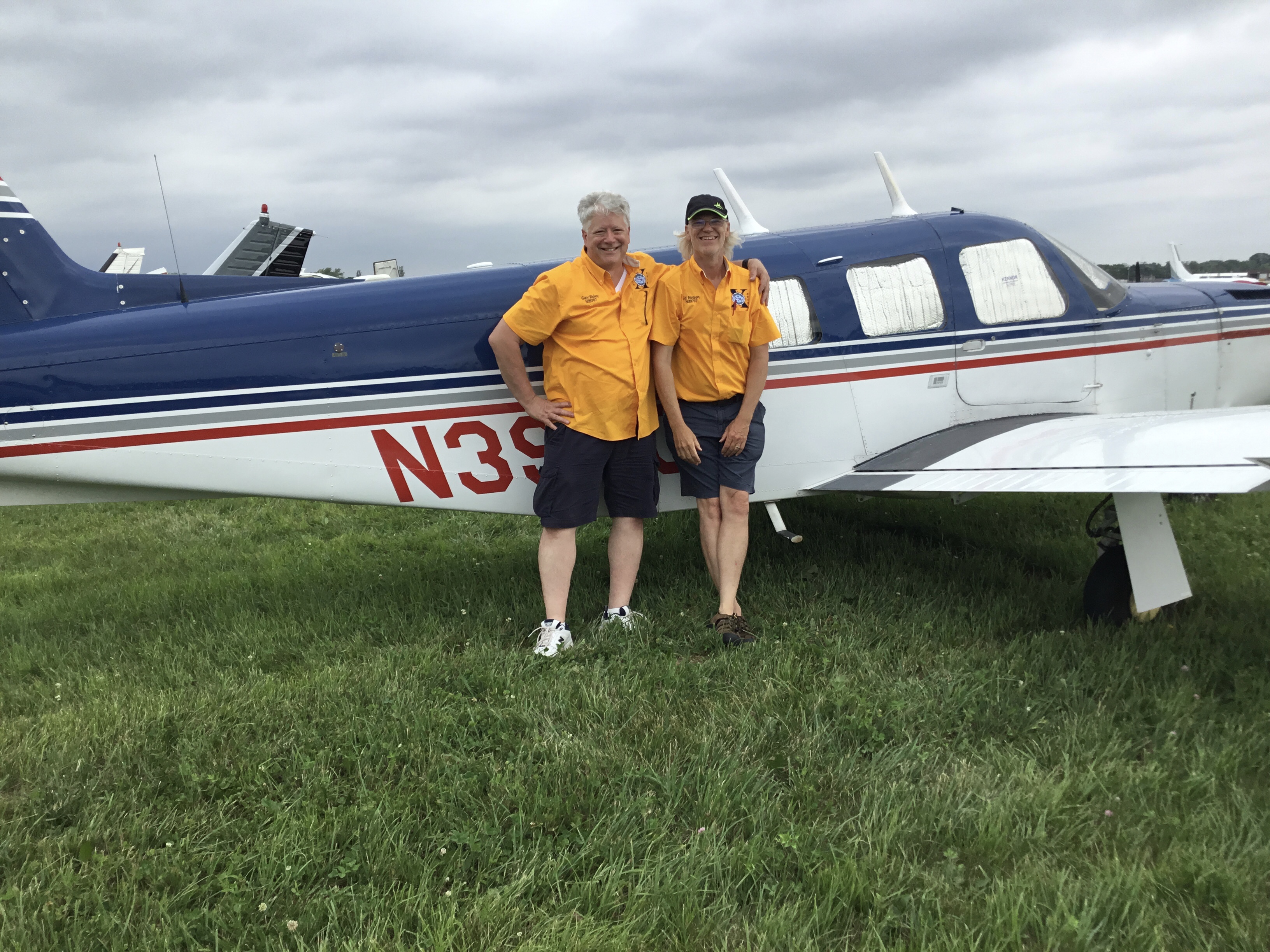
Gary Risley (left) Ed Notson (right) after getting RizAir1 into its tie-down spot- KOSH June 2019.

A quick debrief was held, a short follow-up with my wingmates, and we were turned loose to enjoy Oshkosh.

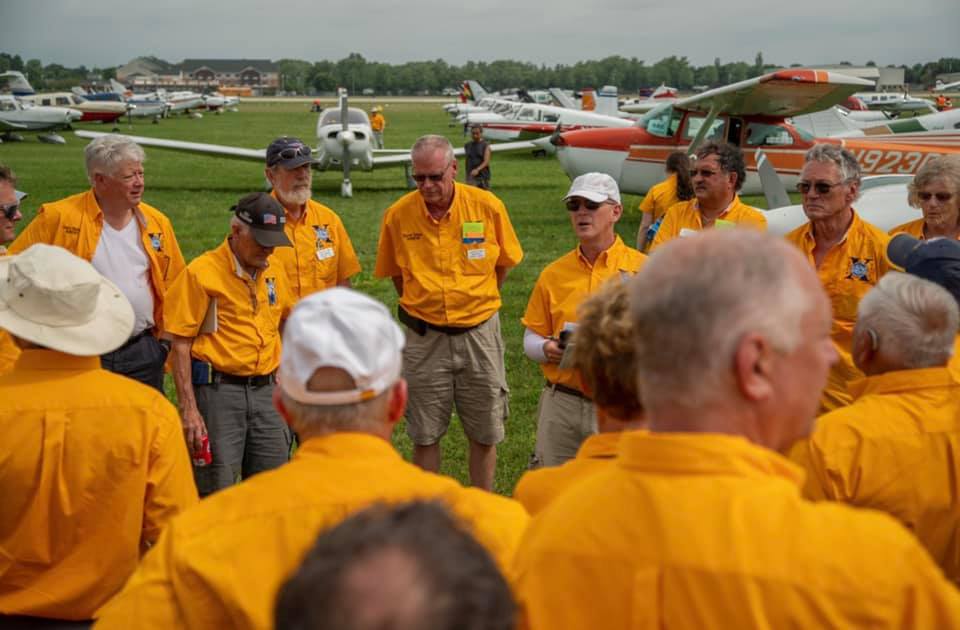
2019-07-20 Post-OSH arrival debrief

Post-arrival debrief. Photo credit to EAA photographers Andrew Zaback, Lewis Berghoff and Crystal Perez! (See more of their excellent photography on the Cherokees To Oshkosh Facebook page)

Between an hour and an hour and a half later, a frog-strangler storm hit that converted the 2019 event into “SploshKosh II” – a repeat of “SploshKosh” from 10 years previously.   Cherokees To Oshkosh was the only mass-arrival group that got in on Saturday, and it was Monday before aircraft with tundra tires were allowed in, and Tuesday before things opened up for everyone else to arrive.  We had placed RizAir1’s tires on large plastic pads used by RV’s on soft ground, driven in our “Claw” anchor points, and secured the flight controls.  She survived the ordeal quite well and was anxiously awaiting our return for the departure home on Thursday of that week.

2019-07 Racing the Storm - Scrren Capture from Flight Aware

Screen capture from FlightAware.

Here is the link to my Garmin 360 video of the trip to OSH.  It is edited from 40 minutes to 16 minutes, but it conveys the sense of the trip: https://www.youtube.com/watch?v=K1rr8YpSYsU&t=12s.

Enjoy, we hope to see you at Airventure 2021,  and until next time,

Clear Skies and Tailwinds!

Gary Risley

RizAir Blog 16

©June 2020


A Long Day’s Journey To Our Destination: Pre-staging For The Flight Into Oshkosh

Dawn, July 18, 2019 – Four Corners Regional Airport.  RizAir1 is loaded to the gills.  Four adults, bags, other paraphernalia, maximum fuel available after deducting the weight of everything else.  Weather briefed, VFR flight plan filed.  Ready to head to AirVenture 2019.  Weeks of carefully planning fuel stops, finding the best fuel prices, and other preparation were completed.  Approaches at the expected fuel stops and nearby fields had been practiced several times on the XPlane 11 flight simulator.

It would be a full day with almost 8 hours of flight time block to block planned. (Block to block is the time the airplane starts moving after engine start to engine shut-down “in the blocks” at the destination.)  Eight hours flying may seem a long time, but airplanes are time machines.  It would take us over 24 hours of driving over two very hard days to make the same trip.  One purpose of this particular blog is to give insight into the planning and flexibility required for long-distance flying in private aviation.

Ed and Jeanne Notson joined my wife, Annette, and me for the trip.  Ed had been flying with me quite a bit in the last year as a safety pilot for instrument practice.  For a trip like this, it is great to have an experienced person beside you to help lighten the load.  More on that subject as further details of the trip are described.

Everything loaded, the plane is pre-flighted, the obligatory picture is taken, and we climb aboard.

2019-08-18 predeparture picture

The first leg of the trip was planned for just under 3 hours to Hill City, Kansas for fuel.

Those mountains that make for such scenic photographs in the Mountain West also serve as somewhat of a roadblock to transportation; whether the mode of transportation be ground-based or flies through the air. Our first leg would require us to go to the maximum altitude we would reach on the outbound trip.  We flew a 072-degree heading from the Rattlesnake VOR along V368 to the intersection in the sky known as Brazo.  At Brazo, we continued to follow V368 on an approximate 040-degree heading to the Alamosa VOR (ALS).  You may ask why we did not fly to ALS direct and follow the GPS there?  ALS lies in the San Luis Valley, and on each side of it are tall mountains.  By doing the dogleg via Brazo we were able to stay below an altitude that would have required me to go on oxygen and possibly have to supply it so the passengers.  I like to preserve my small oxygen bottle for “have to” circumstances.  The dogleg adds less than 5 minutes to the trip.

Bravo intersection

After crossing the ALS VOR, we followed Victor Airway 83-210 through La Veta Pass, the gateway through the mountains east of Alamosa.  I have previously described this pass and the tall terrain either side of it in  Flying Angels Around part 2 – or Thank Goodness for Turobcharged Airplanes! (https://rizair.blog/2018/12/10/flying-angels-around-and-outsmarting-the-weather-part-2-or-thank-goodness-for-turbocharged-airplanes/.)

As we crossed the pass and reached GOSIP intersection, an inquiry to Denver Center revealed that the military operations areas (MOAs in the vernacular) were “cold”; that is, they were not in use.  We then turned direct for Hill City (KHLC).  A few minutes beyond GOSIP, I felt a tap on my shoulder.  It was my wife.  “I need to go to the bathroom,” she announced.

Good grief!  Really! (I have already talked about how much extra take-offs and landings cost in “Of Airplanes and In-laws” https://rizair.blog/2018/07/31/of-in-laws-and-airplanes/).  All the things you tell your kids on long car trips went flying through my mind: “I told you to go before we left.  Well, you are just going to have to hold it!” Etc. Etc.  On all our trips over the years, this had not happened since she was almost nine months pregnant with our first son and we were in a Mesa Airlines Cessna Caravan headed to Abilene from Farmington.  Our son is now more than 30 years old!

Gotta GO bathroom clip art

But when nature calls, we are obligated to answer, so I quickly looked for the nearest point to divert – La Junta, Colorado (KLHX). It still was going to take most of thirty minutes to get the plane into the blocks, so she was ordered to sit back, cross her legs, and hang on until we got there.  So with this little, unexpected diversion, three weeks of flight planning for the trip went out the window.

Apparently, La Junta is a popular place for the Air Force cadets to go as they learn to fly.  I am always nervous flying into an uncontrolled airport which has significant student pilot traffic.  Are they making the right calls?  Are they making calls at all?  Do they even know where they are?  Do they understand that higher performance aircraft need wider traffic patterns and they should not be cut-off?  Do they understand that a heavier, high performance airplane probably is not going to make the first intersection to turn-off the runway?

We managed to work our way into the pattern with the Air Force cadets, we did not run over anyone, and no one ran over us.   Better yet, we did not have any unpleasant “spills” to clean-up in the back!

Well, one thing you need to be when flying in private aviation is flexible.  The balance of the pre-prepared flight plans that were set up and ready to go in my Garmin Pilot app were now rendered useless.  (I guess we could have made the hour-long hop to KHLC, landed, and fueled there, but, again, that is an extra stop.)  So instead, I sit in the lobby of the FBO at KLHX experimenting with routes (and looking at fuel prices) that would still get us to Stevens Point, Wisconsin without an extra stop.

I discussed my thoughts with Ed, and we decided to head to Fremont, Nebraska.  Actually, instead of picking the main airport (KFET), we noticed Scribner State University had its own airfield and the information we looked at said it had fuel at a good price. We filed VFR, were wheels up at 9 a.m. MDT, and quickly climbed to our desired altitude of 11,500 feet.  About half-way in the three hour flight, I am reviewing what used to be called the Airport/Facilities Directory (now called the Chart Supplement), and it was then I discovered in the fine print that Scribner State was no longer selling fuel to the public.  Good thing I looked because we were going to be right at my personal minimums when we got there.

A quick call to Kansas Center and we notified them of the change of destination to KFET.  Fuel was more expensive there, but we knew for sure we could get it. We landed at the nice facility which is Fremont, ate lunch (Annette and I mooched off a pilot group which was grilling up hamburgers that day), fueled and filed IFR for Stevens Point, Wisconsin (KSTE.).  The upcoming leg is an example of why an IFR rating is important for pilots in private aviation.

Why Stevens Point and not direct to Waupaca where the Piper formation group was meeting?  Rental Car.  This was the closest location to OSH that had a rental car that would not charge a king’s ransom for it.  The rate we paid for the whole week equaled one or two days of rental at OSH proper.

There was a stratus layer that started about half-way to Stevens Point.  The tops were around 4 to 5 thousand feet and the bases between 1200 and 1500 feet.  We would be flying over the top of the clouds for most of the trip and would have to shoot an approach into KSTE.

Stevens point approach

Of the 2.8 hour trip, we spent about 36 minutes in the clouds.  The flight was smooth, and the let-down into the cloud tops uneventful.  Stratus layers are usually very stable air.  I asked for and received the RNAV approach to Runway 21 (which I had practiced several times on the flight simulator), and we broke out at about 1300 feet above ground level.  Ed called the runway in sight shortly after we broke out, but I stayed on the instruments for another 300 to 400 feet of descent to make sure we were well clear of the cloud bottoms.  Man, it was nice to have that second set of eyes! We left a beautiful sunshiny day above and landed in a gray, gloomy afternoon with the threat of rain.  We were on the ramp at 3:30 MDT.

The rental car was obtained with a bit of delay, but all went well.  Annette drove the car to Waupaca.  After evaluating the weather, since the bases had risen to at least 1500 feet and were continuing to rise to 2000 feet AGL, we decided to “scud-run” to Waupaca instead of filing IFR.  The estimated time in the air would be less than 20 minutes.  A careful check of the sectional showed that we would be able to stay clear of obstacles.  We were airborne at 4:45 MDT and on the ground at 5 pm MDT.

As we were coming in, we heard a group of Cherokees to Oshkosh pilots landing after doing a practice formation flight.  It was a joy and exciting to hear!  The next day we would do the practice flight and Saturday we would head into Oshkosh itself!  But alas, that story (and video) is for the next blog!

Chero

We located a couple of the CtO pilots at the airport, said hello, got current information regarding that evening’s activities, and then headed to the hotel in our rental car.  We were all anxious to make new friends, practice formation flying, and then experience the event reverently called “Oshkosh” by pilots.

Adventure awaits!

Until next time:

Clear Skies and Tailwinds

Gary Risley

RizAir Blog 15

February  2020

Copyright 2020 by Gary Risley

YES, YOU CAN GET THERE FROM HERE! Scheming On How To Fly Into Airventure

By Gary Risley

2019-07-19 Mike 1 and 2 practice number 2
Photo courtesy of Ed & Jeanne Notson

How does one take 10,000 airplanes, with pilots varying from seasoned professionals to those less than 100 hours of flight time, flying everything from no-radio birds traveling at a maximum speed of 70 miles per hour to those capable of supersonic speed, and get them safely on one airport; especially,  with most of the arrivals squeezed into a two to three day timespan?  Very carefully!

The Experimental Aircraft Association’s Airventure in Oshkosh, Wisconsin manages to pull off the feat every year.  The choreography is conducted by well-trained controllers who sound like auctioneers on the radio, a thirty-page notice to airmen published in cooperation with the Federal Aviation Administration that sets forth the procedures each pilot coming in single ship VFR  is to follow when arriving and departing KOSH, and formation flights by different aircraft groups come together to somehow accomplish the goal of safely getting the very large number of aircraft onto the airfield.Oshkosh 2019 NOTAM cover Sheet

I had attended Oshkosh previously, but I had never flown into KOSH (the airport) proper; although, one year I flew with family into Stevens Point nearby and we took a chartered bus into KOSH each day as part of a gathering of Cessna and Piper owners there.  Having studied the NOTAM outlining the Fisk arrival procedure for visual flight rules traffic, and having watched numerous YouTube videos of that organized chaos, I chose a different method to check landing at Oshkosh during Air Venture off my bucket list.

Each year, various groups get together to fly formation into KOSH in what are called “Mass Arrivals.”  RizAir1 is a 1978 turbo-charged Piper Lance, a descendant of the Piper Cherokee 6 line.  A little research revealed that there is a “Cherokees To Oshkosh” mass arrival group that was participating for the tenth year in 2019.   Other similar groups consist of the “Mooney Caravan”, the Cessnas To Oshkosh, and the Bonanzas To Oshkosh.  I am sure there are others.

You may be wondering – formation flying? Is that safer than flying the Fisk Arrival?  Are you ex-military?  Have you flown formation before?  Yes, it is as safe or safer than the Fisk Arrival. No, I am not ex-military.  No, I have not flown formation prior to planning to do so this year.

Fortunately, the folks who run Cherokees to Oshkosh have a plan for rookies like me.  I went through an application process to be able to join the group.  Although the number of aircraft was expanded to fifty, they quickly filled this year, and alternates were listed.  I was fortunate enough to get my application in early (January) and I was accepted.

One does not just show up the day of the arrival and decide to fly formation.  From the time that we are baby pilots, it is beaten into to us to maintain significant distance from any other aircraft around us, even if that means going around the pattern, leaving the airspace, etc.  We were also taught very specific rules about coordinated flight by keeping in “balance” the rudder, ailerons, and elevator when we turn.  Formation flying throws much of that ingrained training out the window.

So how does one go from rank rookie to approved formation flyer?  The organizers of Cherokees to Oshkosh are well-trained themselves and very safety conscience.  They hold “miCheroni-clinics” around the country each year to train the rookies and refresh those who have previously participated in the mass arrival.  Attendance at one of the clinics is mandatory if one is to participate in the arrival.  They go to extraordinary lengths to accommodate everyone they can, and they donate their time, money, and aircraft for the benefit of the rest of the group.  The other groups mentioned also require attendance at a training clinic in order to be eligible to join the mass arrival.

The CtO organizers are extremely helpful and go out of their way to get things done.  One does not leave a mini-clinic ready to join the Blue Angels or the Thunderbirds, but at least we won’t swap paint – the stated goal of Dwane “Ferg” Ferguson, the recently retired Director of Operations.

I attended the clinic in Mt. Pleasant, Texas.   For the first sortie, I was an observer riding with an experienced pilot.  Whoa! It isn’t natural to be that close to another airplane in flight!  And the lead starts to look really big at the start of a turn towards your airplane.

Each sortie is planned and then briefed with the pilots before launch. Ed LeBlanc, the new director of operations beginning in 2020, organized our clinic and handled the briefings.

Mt Pleseant airport web page picture

Station keeping and concentration on the job are paramount.  Have you heard the saying that “the lead dog is the only one who gets to see a change of scenery”?  Usually the saying is associated with a picture of a sled dog team.  Flying formation is like that.  The only one who sees the scenery is the lead aircraft.  Everyone else has eyes only for the lead aircraft.

The first flight as pilot? Well, it was a bit of an adventure.  Probably recognizing I was going to need extra guidance, the great Ferg himself served as my safety pilot on my first sortie.  It was rough.  The Lance/Saratogas are nose heavy with two adults up front and nothing in the back. I was fighting trying to stay at airspeed and altitude while station-keeping on the lead.  Finally, Ferg took the controls and he exclaimed, “Whoa, I see the problem”.  We had run out of nose-up trim and I was having to pull back on the yoke all the time to hold position.

Dwan Ferg Ferguson
“Ferg”

We survived the sortie, but I needed a solution to the center of gravity problem.  An idea!  I went to the gentleman at the counter of the fixed base operator and asked if I could borrow two cases of oil to put in the back of my airplane.  He looked at me kind of funny, but when I explained why he said “Sure”, gave me a ride to the storage shed, and we loaded up on cases of oil.  (I later went back and borrowed two more cases for good measure.)

What a difference the weight in the back made!  I could trim the airplane, could stay in position, and everything smoothed out on the second sortie.  The hardest part is keeping the airspeed down.  The CtO airspeed is 90 knots indicated.  The turbo-charged Lance is almost hanging on its prop at that speed.  One of the other wingmen commented that he was surprised as how high the aircraft nose was during the straight and level flight.  But, the airplane will fly there and it was my job to make it happen.

The third sortie was a sawtooth drill – left and right turns by the lead.  The Lance has plenty of power to increase speed and fly the outside arc while maintaining position.  The turns into the airplane, well  it’s a little tougher to put on the brakes, pull the power, get the speed down, and stay in the same relative position to lead.  More work needed there.

The fourth sortie was a blast.  They were crazy enough to turn me loose solo!  We took off in a three-ship element followed by a two-ship.  I was “Alpha 3” in the lead group. Sometimes I amaze me!  The flight went well, not perfect, but well.  Turns in both directions were acceptable and within limits.

Each sortie is debriefed.  The discussions are direct, frank, but courteous.  One cannot wear his feelings on his sleeve in a debrief, but the goal is to make everyone safer and better.

Ed LeBlanc
Ed LeBlanc

Well, wonders of wonders, I was signed off to participate in the mass arrival!  Good deal!  But there is one more phase.

The group met in Waupaca, Wisconsin to practice before flying into KOSH.  The Friday’s briefing and sorties were mandatory to participate, so don’t be late!  I was hoping they didn’t decide to tear up my approval card on Friday.

The Cherokees to Oshkosh mass arrival was scheduled for the Saturday morning before Airventure starts.  The other mass arrivals were scheduled for Saturday also.  That is a story for another blog!

So how is this safer than the Fisk Arrival when I am flying close to two or more airplanes?  Well, because I only had to worry about one airplane really – the lead, and not 500 other airplanes all trying to hit the Fisk Arrival at the same time.  All I had to do was not swap paint as Ferg commanded.  I knew I could do that much.  So I got to fly into KOSH with a bunch of new friends, whom I already knew are great people to be around, and I got to land when the airfield is closed to all other arrivals except us.

Seemed like a good deal to me.  Flying in a mass arrival, I was confident that I could get there from here.  Someone else has done most of the work and laid the road.  I just need to stay between the bar ditches.

CTO MT Pleasant Ferg and Dennis
Dennis Frett and Ferg – Mt. Pleasant, Texas Debrief

If you are a pilot, you should consider getting basic formation flying training and join a group flying a mass arrival.  I think you will really enjoy the experience.  If you want to go with the Cherokees to Oshkosh group, you better get your application in as soon as they open up – usually in January of each year.  Here is there weblink: https://cherokees2osh.com/.  They also have a Facebook page: https://www.facebook.com/Cherokees-to-Oshkosh-179484018761023/.

Until next time – Clear Skies and Tailwinds

Gary Risley

Next blog: Racing the weather into “Sploshkosh!”

RizAir Blog 14 Dec 18 2019 Copyright 2019